Flames and Steel (official thread)
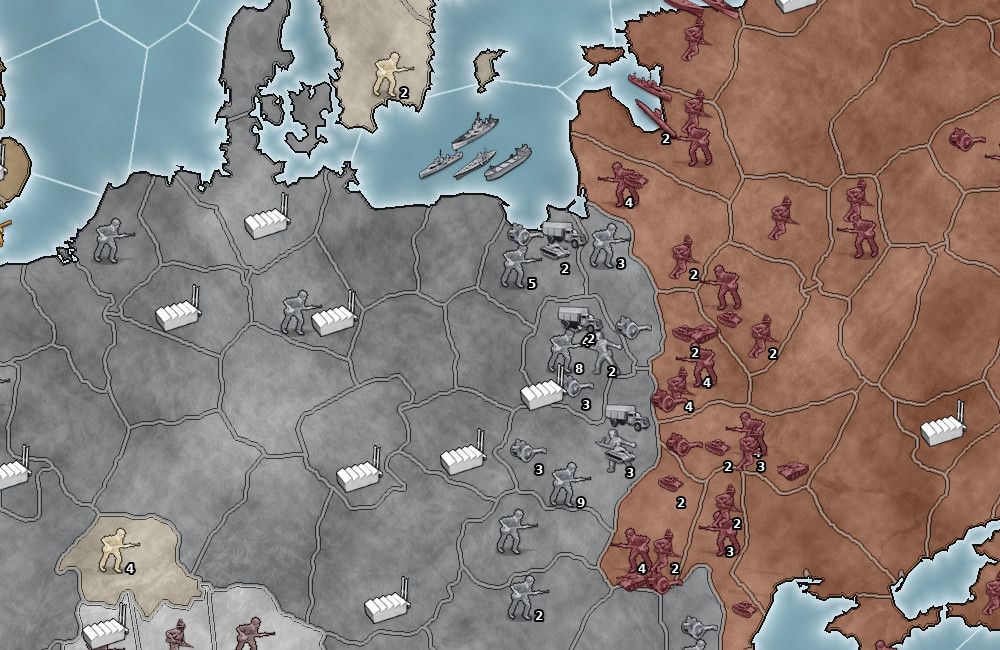
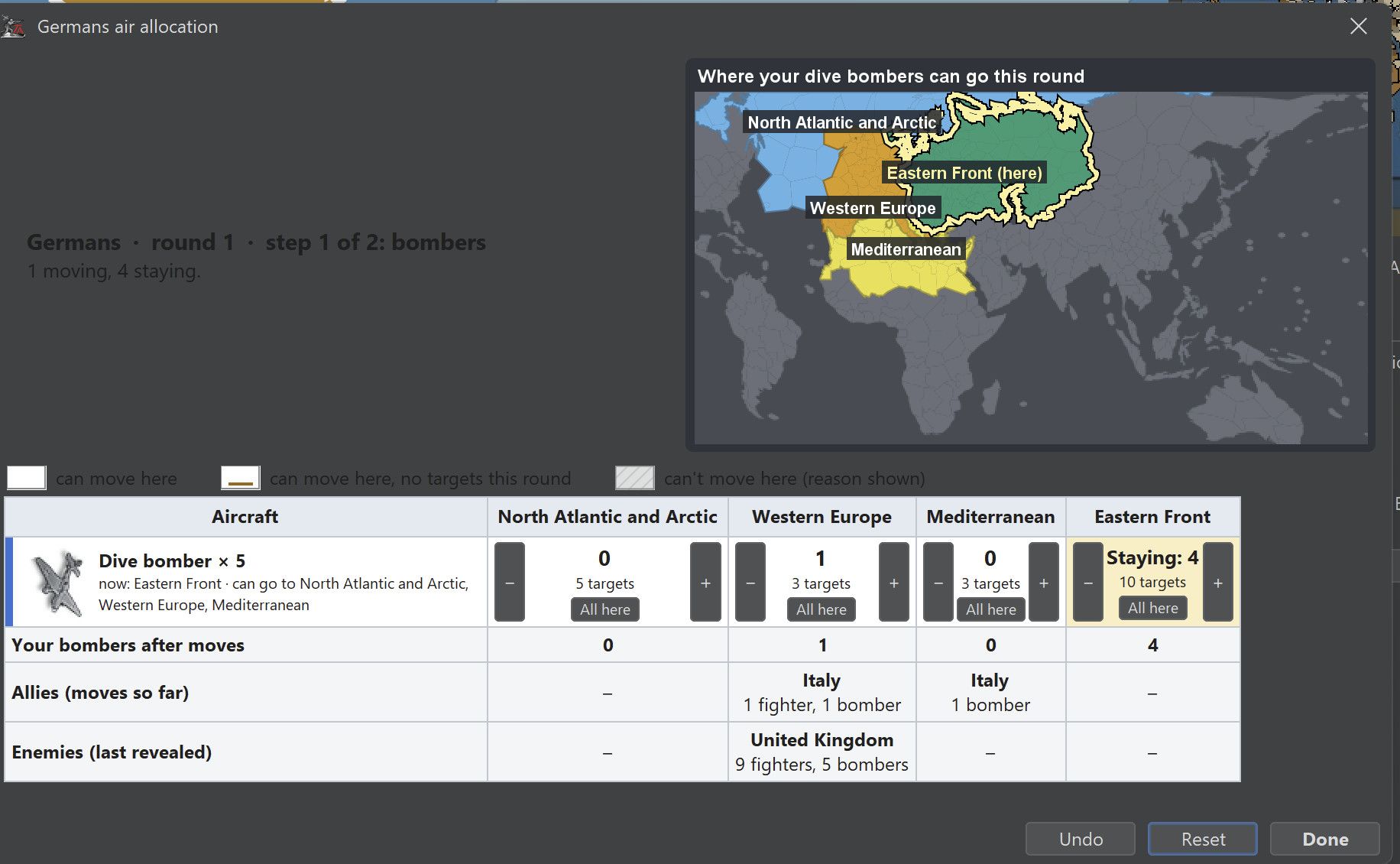
-
Cernel said:
Even if you do not have paratroopers (right?), I guess you can have the Fallschirmjäger as the name for the elite German infantry, as they are maybe the most obvious case of what an arguably purely elite infantry may be. The problem with that, however, is that they were very few in numbers in 1941. They became an actual main thing as an elite infantry of Germany late in the war.
To be clear, not having paratroopers and having Fallschirmjäger as elite infantry would be perfectly fine starting in June 1941 because almost all of them would actually never fight as paratroopers (some major exceptions), so they were actually much more elite infantry than paratroopers.
I'm not sure how many of them were even trained as paratroopers from 1942 onwards, so I'm going to ask Google AI right now "What was the percentage of Fallschirmjäger actually trained as paratroopers from 1942 to 1944?" The answer is
There is no single, exact official percentage recorded for the entire Fallschirmjäger branch between 1942 and 1944, as jump-qualification rates varied drastically by division and year. However, historical records show a steep collapse from nearly 100% jump-qualified in early 1942 to under 10% in newly formed divisions by mid-1944.
-
Only alternative I can think of that might be fitting is Grenadier.
I agree, but from late 1942 onwards every infantryman was formally a grenadier. That would work if Germany can only buy elite as its "cheapest" infantry (which would be fine if we want to picture the assumed basic German tactical superiority). A game starting in mid 1941 could have "grenadier" as the cheapest German infantry (but with cost and values of an elite infantry), meaning that Germany can only buy elite (called "grenadier") as infantry units, anticipating by a little more than 1 year the formal naming and picturing the German army as an all-elite infantry thing. That would be arguably fine, but it is a choice. It's disputable how much elite the basic German infantryman was with respect to others.
-
@Cernel Acceptable departures from reality, I think. Having Germany only able to buy elite infantry that are better than everyone else's is a far bigger violation of realism (as well as game balance) than playing a bit fast and loose with the unit names.
Germany's average level of unit effectiveness was indeed higher than anyone else's, and if you were narrowing down a list of the most accomplished divisions in the entire war, the Germans would command a very outsized share of it, but still, the German army varied a lot in quality, just like everyone else's, and they raised their own share of mediocre to badly performing units too.
-
Having Germany only able to buy elite infantry that are better than everyone else's is a far bigger violation of realism (as well as game balance) than playing a bit fast and loose with the unit names.
I tend to agree, but then we cannot use "grenadier" as name for a German elite infantry on the account that, from late 1942 onwards, that was the name for the basic infantry, and we are back on square one for what is a good name for a German infantry elite.
At this point, maybe it is better just to call it "elite_infantry". I would suggest that over "sturmtruppen" at least.
-
This seems rather dangerous to me. Infantry is the basic building block the whole combat system in A&A is balanced around. If you're giving the basic Infantry double the attack and 50% more defense for the same price, it immediately devalues every single unit that's more expensive than the infantry (in other words, almost all of them). So then you have to go and figure out new values for all those other units and rebuild the whole balance from scratch.
It's also turning the Sturmtruppen into a god unit (your existing version already gets the same combat stats as a Fighter from the base game once it's upgraded, and it costs less, and it gets even better with artillery). Rolling a second dice (if that's what 3+2 / 3+3 means) is a big power boost.
D3+D2: 33% double miss, 50% single hit, 17% double hit
D4: 33% miss, 67% hitD3+D3: 25% double miss, 50% single hit, 25% double hit
D5: 17% miss, 83% hitI would recommend keeping the base infantry at 1A/2D.
If you want other nations to have elite units that are better than the standard infantry but not as good as the Sturmtruppen, make those 2A/2D.
Or you could make them 2A/3D and on par with Sturmtruppen, but they don't get access to that assault rifle upgrade.
If you want certain countries to have lower tier infantry than the standard, just make them 1A/1D. You can give Italy, Japan, etc a tech to research them up to 1A/2D like everyone else's.
One other thing you can do if you want to make the major powers have stronger infantry than the minors is not to change the infantry stats at all, but the effectiveness of their support.
For instance, everyone gets 1A/2D basic infantry, but the USA, UK, and Germany start with a tech that allows each artillery to support two infantry, while Italy, Japan, and the Soviets need to research it.
I may see things a bit differently than you do.
Recall that manpower points (MPs) are a separate resource type. A nation which gets 30 PUs a turn and 10 MPs a turn should build 10 infantry or conscripts or similar. A nation which gets 10 MPs a turn and 200 PUs should also build 10 infantry a turn or similar. It cannot build more than the 10, because its infantry production is being constrained by lack of MPs, not by lack of PUs.
Units which cost PUs need to be balanced against other units which cost PUs. No question there. But for infantry, the main cost is the 1 MP, not the one PU. If I make infantry better for Britain, America, and Germany, then that increases the value they receive from their MPs. In my sample games, Germany and Britain each needed more cannon fodder than they had MPs, causing them to buy anti-tank guns to fill the need. America Atlantic was getting to that point as well.
With all this in mind, I believe I can improve infantry for a number of nations without having to rebalance anything regarding PU-only units.
What might cause me to need to rebalance PU-only units is your wish for a better light tank.
-
To add to my earlier post:
I don't know if I'm upgrading the light tank or not. But if I am, the following would be true.
- The light tank upgrade would be available through research. No one would start with it.
- The upgraded light tank would attack on a 3 and defend on a 2. Just like the tanks in Classic! Also a light tank costs 5 PUs, which is also a lot like a tank in Classic.
- Anti-tank guns would not cancel out the upgrade. The anti-tank gun is, to some extent, the new infantry. Letting an anti-tank gun cancel out the upgrade on a 1 for 1 basis would be almost like letting infantry cancel out the upgrade. Also I'm adverse to having an extra game mechanic.
- If I allow the upgraded light tank to attack on a 3 and defend on a 2, then I need to allow upgrades to the medium tank to keep them significantly ahead. That in turn means I need to have upgrades to the heavy tank to keep heavy tanks significantly ahead of the medium tank.
All this starts with an upgrade to the heavy tank.
Currently a normal heavy tank or Panther has four hitpoints, and attacks and defends on a 4. Whereas a medium tank has 2 hitpoints and attacks and defends on a 3. The heavy tank is twice as good for hitpoints, not much better than a medium tank for firepower.Suppose I were to give a heavy tank or Panther a firepower of 4 + 4 for offense and the same for defense. Also 4 hitpoints. That lifts the ceiling on what I can now give to the medium tank. An improved version of the medium tank could attack and defend on a 4, while keeping its two hitpoints. The Comet tech for Britain would cause its medium tanks to attack and defend on a 5.
So now you compare the improved light tank ( 3/2 ) to the improved medium tank ( 4/4 ). In absolute terms the medium tank is stronger on offense, defense, and hitpoints. If you're looking at what you're getting per PU spent, the improved medium tank is the better unit for hitpoints and defensive firepower, while the light tank is the better unit for offensive firepower per PU. Therefore each still has a role.
If you're worried about balancing them against artillery-category units, I would point out the following.
- The purpose of an anti-tank gun is cannon fodder that you can buy without using MPs. None of the above upgrades reduce tank costs or improve their hitpoints, so the anti-tank gun continues to provide more hitpoints for the money than light tanks or medium tanks.
- Working women tech reduces the cost of a field gun by 1 PU, and a heavy gun also by 1 PU.
- Creeping barrage tech causes field guns to attack on a 3 instead of on a 2. Railway guns tech causes heavy guns to defend on a 5 instead of on a 4. Given that field guns and heavy guns are getting more firepower for the money as the game progresses, tanks can get more firepower too.
-
@KurtGodel7 said:
With all this in mind, I believe I can improve infantry for a number of nations without having to rebalance anything regarding PU-only units.No, this is not correct, because the exchange rate between MP and PU is not consistent for different countries - as you’ve said, they all have very different ratios.
Giving a flat power boost to infantry thus disproportionately benefits nations that have higher MP values because those infantry will have higher kill rates against the PU-only units. Whoever is able to field more Infantry gets a huge boost, and whoever relies more heavily on PU takes a big hit because they’ll be losing those expensive units at a higher rate.
As for the AT Gun, right now I think you’re essentially setting players up for confusion by giving them a unit that’s called “Anti-Tank” but has no actual anti-tank properties - in contrast to the AA Gun, which does in fact counter aircraft.
If you’re running into the problem that major countries don’t have enough MP to properly fill out their armies, I think the more obvious solution might have just been to put more MP on the map instead of having a redundant unit fill the gap.
A few thoughts on this.
- There are different types of balance here. Balance between unit types, and balance between the Axis and the Allies.
- If the game is unbalanced between unit types, a player will eschew the overpriced/underpowered units in favor of the units which give him the most bang for the buck. Balanced units means each has a role to play, depending on the situation.
- If the game is unbalanced in favor of the Axis or the Allies that would obviously lead to a less than ideal game.
- Your earlier concern was that improving some nations' infantry could make the game unbalanced between unit types. The concern you're expressing here is that the infantry buff could make the game unbalanced between Axis and Allies. As for the latter concern: if play testing does reveal this latter source of imbalance there are ways it can be corrected. Starting units can be adjusted. The magnitude of the Allies' early game income nerfs can be altered. I can change technologies. Lots of levers I can pull to create game balance.
- There were four key things which happened in the real war, which were not being captured by Axis and Allies.
- Increases in military production. Between 1942 and 1944 Germany and Japan roughly tripled their production of military aircraft, while American military aircraft production roughly doubled.
- Increases in technology. A good aircraft by the standards of 1941 would be hopelessly obsolete by the standards of 1944.
- The air war. Planes would shoot down enemy planes. This would create air superiority for some nations, with real advantages associated with it.
- Limited manpower. Different nations had different population sizes, and this affected the number of men they could recruit into their armies.
The main contribution I envision for Flames and Steel is to create realism for all four of those things. To address specifically the subject of manpower. If it's a game of Revised, and if Japan is building way more infantry than the Soviet Union, that's 100% ahistorical. Way more ahistorical than anything which has been pointed out in this thread. I am not allowing that to happen in Flames and Steel. Manpower points prevent that from happening.
- Manpower points are working exactly as intended in my test games. A nation like China will have large numbers of conscripts, as well as a few artillery type units mixed in. A very realistic unit mix for it. The Soviet Union will have vast numbers of soldiers, as well as plenty of good PU units to go along with those soldiers. Again a realistic unit mix.
- The mechanics of the game require a cannon fodder unit. To a large extent that's infantry. But because I gave each nation an MP cap, a PU-only cannon fodder unit was also needed. I will grant your point that calling it an "anti-tank gun" could be confusing for people unfamiliar with the map. As you say it has no anti-tank properties. But I needed that unit. I needed to give it a name which a) did not imply fast mobility, b) did not imply it was a type of infantry, and c) did not imply it was a very powerful unit. Calling it an "anti-tank gun" checked all three boxes. If anyone here has a better suggestion for a name I'm all ears.
-
To add to my earlier post: territories produce PUs for any nation which owns them. But they only produce MPs for their original owner.
Suppose that Japan conquers all of China. There would be a PU reward for doing this--maybe 25 PUs or something. But China starts off with an income of 11 MPs, I think. 11 Chinese conscripts per turn, plus whatever units China is able to buy with its PUs. China's main source of military strength is those 11 MPs, and those MPs do not go to Japan if China is conquered. This means that a Chinese-controlled China is a much bigger asset for the Allies than a Japanese-owned China would be for the Axis.
-
- The mechanics of the game require a cannon fodder unit. To a large extent that's infantry. But because I gave each nation an MP cap, a PU-only cannon fodder unit was also needed. I will grant your point that calling it an "anti-tank gun" could be confusing for people unfamiliar with the map. As you say it has no anti-tank properties. But I needed that unit. I needed to give it a name which a) did not imply fast mobility, b) did not imply it was a type of infantry, and c) did not imply it was a very powerful unit. Calling it an "anti-tank gun" checked all three boxes. If anyone here has a better suggestion for a name I'm all ears.
Having the "light_mortars" or "infantry_mortars" as a unit, decoupling it from "infantry"? (I guess currently the "infantry" unit comprises mortars like the American 60mm and 81mm ones, which would be the mortars I'm talking about?)
However, assuming same number of men, that cannot cost much more than the infantry unit.
My suggestion for PUs use would rather be having ammunition consumption (especially for artillery). However, you could make the "light_mortars" unit enough costlier than it should be by just assuming a lot of ammunition consumption being implied in the initial cost (if there is no ammunition consumption in the game).
(However, adding ammunition consumption - even if comprising any related consumption like barrel's wear - is of course going to open for a lot on many respects, not last the ammunition consumption for AA artillery and of course bombs consumption and so on, then one would also say why not fuel consumption and so on and so on.)
One possibly nice thing of having "light_mortars" is that then you could represent the Japanese Type 89 grenade discharger (maybe).
-
Or, instead of anti-tank, having light artillery (like the German 10.5 cm leFH or the Soviet 76-mm divisional gun M1939/M1942 - the latter is actually lighter and is almost an anti-tank gun) for that role. I'm not sure. It would definitely feel better as a "universal" unit which can take out tanks too without having any special anti-tank rule.
-
@KurtGodel7 said:
The mechanics of the game require a cannon fodder unit. To a large extent that's infantry. But because I gave each nation an MP cap, a PU-only cannon fodder unit was also needed. I will grant your point that calling it an "anti-tank gun" could be confusing for people unfamiliar with the map. As you say it has no anti-tank properties. But I needed that unit. I needed to give it a name which a) did not imply fast mobility, b) did not imply it was a type of infantry, and c) did not imply it was a very powerful unit. Calling it an "anti-tank gun" checked all three boxes. If anyone here has a better suggestion for a name I'm all ears.How about Infantry Gun then? That was a pretty common term and it creates less confusion with the unit’s purpose.
The concern you're expressing here is that the infantry buff could make the game unbalanced between Axis and Allies. As for the latter concern: if play testing does reveal this latter source of imbalance there are ways it can be corrected. Starting units can be adjusted. The magnitude of the Allies' early game income nerfs can be altered. I can change technologies. Lots of levers I can pull to create game balance.
There are lots of ways to mess with the balance and compensate, I was just warning you that you’re about to make a lot more work for yourself. The more common a unit is, the higher the impact any change on it has. The impact is higher as well when the starting stats are low to begin with. A unit that gets a stat bump from 3 to 4 increases its hit rate by 33%, but a 2 to a 3 is a 50% increase, and a 1 to a 2 is 100% increase.
Hello! It looks like you're interested in this conversation, but you don't have an account yet.
Getting fed up of having to scroll through the same posts each visit? When you register for an account, you'll always come back to exactly where you were before, and choose to be notified of new replies (either via email, or push notification). You'll also be able to save bookmarks and upvote posts to show your appreciation to other community members.
With your input, this post could be even better 💗
Register Login