Flames and Steel (official thread)
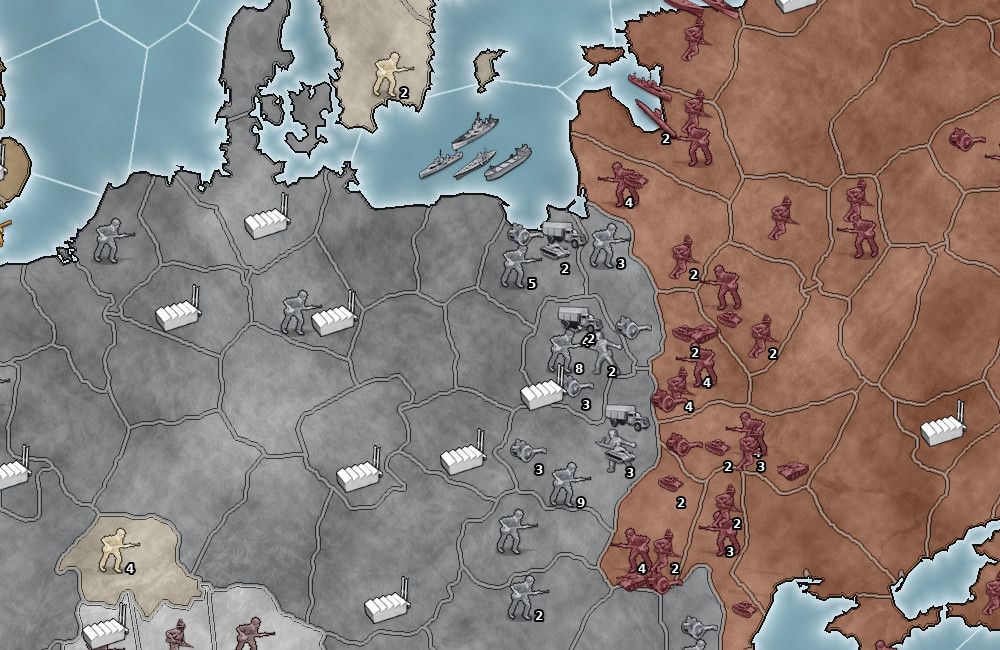
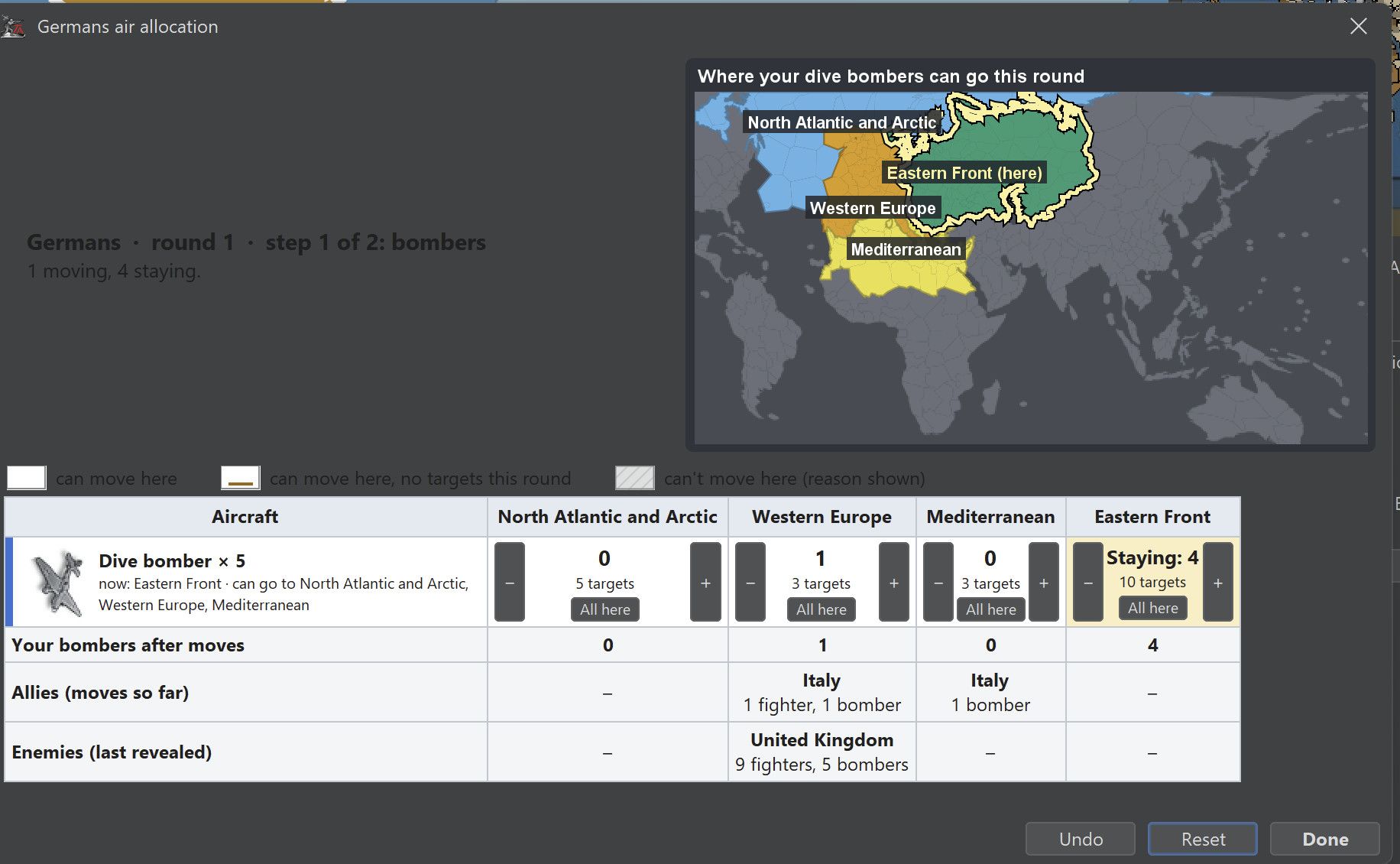
-
@KurtGodel7 said:
The USSR can have this unit also, called "Revolutionary Guards," cost 1 MP and 3 PUs.That one’s definitely an error, Revolutionary Guards is an Iranian term, not a Soviet one.
Guards Infantry, Gvardiya, or just plain Guards.
Thanks for the correction. I've fixed the naming error. From Claude:
The Revolutionary Guards are now Guards Infantry, in draft 113. It’s installed in your TripleA maps folder and ready to load, though I haven’t run the game.
The unit’s stats are unchanged: attack 2, defense 3, 3 PU + 1 MP.
-
To address your point, I've decided to give Italy an elite infantry type, called the Alpini. Conceptually similar to [edit] the Soviet Guards Infantry. Cost 3 PUs, 1 MP. Attack 2, defend 3.
The Alpini are specialized mountain troops so would fit better in a game with terrains and mountain combat modifiers. For the role of non-terrain-related elite infantry, I guess the two main contenders would be the "bersaglieri" and the "black shirts" or "assault black shirts" then eventually "M" as a further honorific upgrade. (For example, the Legione Camicie Nere d'Assalto "Tagliamento" was eventually renamed Gruppo battaglioni M "Tagliamento". Up to you how to turn this into a unit name for the game in case.)
The problem with the bersaglieri is that they are supposed to be not just infantry elite but also fast moving infantry, kind of bridging infantry and cavalry or providing infantry to follow tanks, so they got various degree of motorization (but I'm not sure how much: I'll ask Google AI). The problem with the black shirt is that whether or not they were elite as a matter of actual performance is disputed (but I'm not an expert).
I really don't know much about the Italian bersaglieri and black shirts, so I'm just pointing them out as possible candidates for the Italian elite role, not actually telling you to pick one or the other one or either. I'm also not necessarily saying that they are better than the alpini for the elite role. Maybe ask Claude what it would pick if anything.
Asking Google AI "In 1941, what was the percentage of bersaglieri in the Italian army and what percentage of them was on foot, was equipped with bicycles, was motorized or was mechanized (no tables)?", the answer is
In 1941, the Bersaglieri made up roughly 1.2% to 1.8% of the Royal Italian Army (Regio Esercito). Because the Italian military did not publish fixed annual statistical breakdowns by mobility type, these figures are derived from the 1941 order of battle across the corps' 12 active regiments (comprising approximately 28,000 to 32,000 soldiers out of an army of 1.6 to 2.5 million men).
Share of the Italian Army
• Total Bersaglieri Strength: Roughly 1.2% to 1.8% of total army personnel. They were an elite light infantry corps organized into 12 regiments (36 battalions plus independent companies), rather than a mass-conscript branch.
Breakdown of the Bersaglieri by Mobility Type (1941)
• Mechanized (0%): In 1941, 0% of the Bersaglieri were mechanized. The Italian military had no armored personnel carriers or infantry fighting vehicles in service; even Bersaglieri regiments assigned to armored divisions (Ariete, Centauro, and Littorio) rode into battle in unarmored trucks or on motorcycles.
• Motorized (~50% to 55%): Roughly half of the corps operated as motorized infantry (mounted on trucks and motorcycles). This included the six regiments permanently assigned to armored and motorized divisions—specifically the 5th, 7th, 8th, 9th, 10th, and 12th Bersaglieri Regiments—as well as the 3rd Regiment, which converted to a truck-borne (autotrasportato) unit in 1941 prior to deploying to the Eastern Front. Additionally, every Bersaglieri regiment contained at least one dedicated motorcycle company.
• Equipped with Bicycles (~20% to 25%): Roughly one-quarter of the Bersaglieri served as cyclist infantry (ciclisti). These were primarily the regiments assigned to the Celere (Fast) Cavalry Divisions—such as the 6th and 11th Regiments—equipped with Bianchi folding military bicycles, though they were occasionally transported by truck over long distances.
• On Foot (~20% to 25%): The remaining quarter operated primarily as standard foot infantry. Regiments deployed as army corps troops or occupation garrisons in the mountainous terrain of Greece, Albania, and Yugoslavia—such as the 1st, 2nd, and 4th Regiments—relied mainly on marching on foot due to rugged terrain and severe vehicle shortagesSo I guess the alpini are not very good for infantry elite because they are rather specialized mountain troops, the bersaglieri are not very good for infantry elite because only about half of them was non-motorized, unless you want to have a unit called "bersaglieri infantry" and an other unit called "motorized bersaglieri" (Yes, I know that they are both infantry, but I'm going with the usual TripleA names.). I guess this would leave the "assault black shirts" as a possible best candidate. I'm going to ask Google AI about their motorization.
Asking Google AI "In 1941, what was the percentage of assault black shirts in the Italian army and what percentage of them was on foot, was equipped with bicycles, was motorized or was mechanized (no tables)?", the answer is
In 1941, "assault" Blackshirts (Battaglioni d'Assalto of the MVSN) comprised approximately 4% to 6% of the active Royal Italian Army (Regio Esercito). Among these assault Blackshirt units, roughly 98% to 99% operated on foot, 1% to 2% were motorized (truck-borne), and 0% were equipped with bicycles or mechanized.
Overall Percentage in the Italian Army
• Total Army Strength: In 1941, the mobilized Royal Italian Army maintained a field strength of roughly 1.7 to 2 million men across its infantry, alpine, mobile, motorized, and armored divisions.
• Blackshirt Assault Strength: While the entire MVSN militia numbered around 340,000 personnel (including territorial, coastal, and anti-aircraft duties), the front-line field battalions (battaglioni d'assalto, da montagna, and replacement units) accounted for roughly 90,000 to 112,000 men.
• Organizational Role: Rather than forming independent divisions—the three original Blackshirt divisions in North Africa were destroyed by February 1941—assault Blackshirts were organized into two-battalion legions (Legioni d'Assalto, about 1,300 men each) attached to regular Italian binary infantry divisions, alongside newly formed elite Battaglioni "M" established in October 1941.Breakdown by Mobility Type (1941)
• On Foot (~98% to 99%): Virtually all Blackshirt assault legions were standard foot infantry. A standard assault legion was allocated only about 5 trucks for headquarters and supply logistics, relying on roughly 200 pack mules and foot marches for tactical movement. Even units attached to "auto-transportable" divisions marched on foot because the army lacked enough trucks to move them simultaneously.
• Motorized (~1% to 2%): Only a tiny fraction was motorized (autocarrata). The most prominent example in 1941 was the 63rd Assault Legion "Tagliamento" (roughly 1,400–1,800 men), which was converted into a motorized legion and sent to the Eastern Front with the Italian Expeditionary Corps in Russia (CSIR). Even then, chronic truck shortages meant its troops frequently had to march on foot while trucks carried their heavy gear.
• Equipped with Bicycles (0%): In 1941, no Blackshirt assault units were organized as bicycle troops. Bicycle infantry (ciclisti) in the Italian military was a specialized role reserved for regular army Bersaglieri battalions (a handful of Blackshirt battalions, such as the 152nd Legion "Acciaiata", were not converted into bicycle units until 1942).
• Mechanized (0%): Neither the Blackshirts nor the regular Royal Italian Army possessed true mechanized infantry in 1941, as Italy lacked armored personnel carriers (APCs) and half-tracks. The MVSN did not form an armored unit until the 1ª Divisione Corazzata CC.NN. "M" was raised in May 1943.It looks to me like the best pick overall for an Italian elite infantry unit is the "black shirts" or "assault black shirts" (either name is fine): they are much more numerous than the bersaglieri and are almost entirely truly foot infantry and are not terrain-related like the alpini (which are specialized for mountain fighting).
However, I'm sure that some may argue that the alpini and the bersaglieri were more elite than the black shirts as a matter of military prowess. Myself, I'm not knowledgeable enough to give an opinion about this.
-
To be clear, the fact that the alpini were specialized for mountain fighting does not mean that they would not perform better than the regular infantry also in other terrains. Having them as elite infantry in a game with no terrains may still make sense.
-
Some may even argue that the assault black shirts were just the fascists and were not any better than the regular infantry so should not be elite infantry at all. As I said, I'm not knowledgeable enough to give an opinion about this. Alpini is a less controversial pick, one which I think everyone or almost everyone would agree about their superior fighting value.
Asking Google AI "Were the assault black shirts actually elite infantry in the sense of usually performing better in combat than the normal infantry?", the answer is
No—with the exception of a few specialized late-war units, the Italian Blackshirts (Milizia Volontaria per la Sicurezza Nazionale, or MVSN) were generally not elite infantry and frequently performed worse in combat than the regular Royal Italian Army (Regio Esercito).
While their uniforms and rhetoric drew heavily from the Arditi (Italy’s elite World War I shock troops), their actual battlefield record was largely undermined by poor training and political favoritism.Why Standard Blackshirts Underperformed
• Political Origins Over Military Skill: The MVSN began as a fascist street-fighting paramilitary (Squadristi) designed for domestic intimidation and political loyalty rather than conventional warfare.
• Inadequate Training and Equipment: According to historical overviews on Flames of War and Avalanche Press, standard Blackshirt legions lacked the rigorous tactical training, heavy weaponry, and logistical support of regular army divisions.
• Poor Early-War Record: In major campaigns—such as Ethiopia, the Spanish Civil War, and the 1940–1941 North African offensive—full Blackshirt divisions suffered heavy defeats and were routinely outperformed by standard army formations. Following their destruction in North Africa in early 1941, regular CCNN legions were largely pulled from frontline divisional duties.
• Historical Consensus: On r/WarCollege, military history enthusiasts express mixed opinions on the militia's ceiling, noting that while some individual units fought adequately under strong leadership, the consensus is that standard Blackshirts suffered from insufficient training and inferior combat experience compared to regular soldiers.The Exception: The "M" Battalions (1941–1943)
Because standard Blackshirt units performed so poorly, Mussolini overhauled the best remaining troops in 1941 to create the "M" Battalions (Battaglioni M):
• Actual Assault Troops: Named after Mussolini (or Morte, meaning death), these units were purged of underperforming men and built strictly from veterans who had already proven themselves in combat in Greece or Russia.
• Specialized Training: As detailed in historical records on Wikipedia, these battalions received genuine specialist assault training, better equipment, and higher pay.
• Combat Effectiveness: Unlike the regular Blackshirt legions, the "M" Battalions functioned as legitimate shock infantry, fighting fiercely and effectively on the Eastern Front and in Tunisia alongside elite German and Italian army units. -
Some thoughts:
- I don’t think I should use the name Blackshirts, for the reasons you’ve already pointed out.
- I’m already using Bersaglieri as the name of a tech that improves Italian mobile infantry, which fits the roughly half of them that were motorized.
- My understanding of the Blackshirts is that they began as a Fascist political militia, then fought as mostly non-elite infantry. From late 1941, men who had proven themselves in combat were picked for the M battalions. Those were genuine elite infantry, but they were few, the name means little to most players, and some might be uneasy about their Blackshirt origins.
- I agree the Alpini were specialized for mountain combat. But since the map has no terrain, this unit stands for Italy’s best infantry in general, and the Alpini were elite troops as well as mountain troops. They seem the most recognizable and least disputed name for that role.
-
With the Blackshirts, it depends a lot on which formations you’re talking about. The actual Blackshirt militia divisions, generally not very good. The “M” battalions that were created as specialized assault units and attached to other divisions, on the other hand, were some of Italy’s best.
But I’d say Bersaglieri or Alpini makes the best name for a better infantry class unit, those were Italy’s best known elite formations. The game’s already abstracting a lot of stuff so I wouldn’t let the absence of a mountain terrain mechanic get in the way if that’s what you feel the best pick is.
-
A list of recent modifications:
- Vichy France added.
- Japan's Night Action tech changed. Instead of improving the raw power of Japan's cruisers and Yamato battleships, it now greatly improves Yamato battleships' ability to provide support to destroyers and cruisers. A Yamato provides + 2 support to a max of three other ships.
- Medium tanks can now blitz. Currently light tanks and medium tanks can blitz. Units which cannot blitz: Heavy tanks, mobile infantry, mechanized infantry, M7 Priests, Katyushas.
- Gave America Pacific the ability to research USS Iowa tech. This causes America Pacific's battleships to gain +1 hitpoint. They can support 2 ships instead of 1. While a normal battleship would top out at a firepower of 4 + 4, an Iowa would top out at 5 + 5. A Yamato will top out at 5 + 5 + 4.
- A four tier infantry system added. China: tier 1. Soviets: tier 2, with tier 3 as their elite unit. Japan: tier 2. Can upgrade to tier 3 with tech. Italy: tier 2, with tier 3 as an elite unit. Britain, Germany, USA: tier 3. Germany can build tier 4 as an elite unit.
This game is getting close to being ready to share with other people.
-
@KurtGodel7 said:
In New World Order, Italy is a very important Axis power. The same is not true in Flames and Steel. In Flames and Steel, Italy will pick a local project, such as defending Gibraltar, or pushing east against the British in North Africa. The value of the area near Cairo is modest, so Italian success in Northeast Africa does not create a seismic shift in favor of the Axis. It's a few extra PUs.Italy has 6 MPs, and those allow it to punch a little above its weight. Research isn't very exciting for Italy. It wants the income-increasing techs, of course, but there's little else in its tech tree that it feels truly excited about.
The City of Reno, NV, describes itself as "the biggest little city in the world." My description of Italy would be similar: "the biggest minor power in the world." In my test games, Italy's local projects had gone well, at least for the early game. That made me feel as though Italy was pulling its weight. Italy's life would become harder once America Atlantic has fully mobilized (on round 10).
I don't think you want any of the playable powers in the game to feel boring in terms in terms of research. Italy should not be on par with the major powers, but it shouldn't feel like it's totally barren when you're playing with them.
When I was designing unique Italian techs for TRO, the themes most of theirs fell under were either getting the most out of cheap units, or special operations stuff that's flashy and exciting but not really as practical or versatile as the capabilities that the big powers got.
Here were some of the ideas that either made it into the mod or were left on the drawing board that might be adaptable if you want any of them. I've changed some of the unit names around to match yours where appropriate.
Camicie Nere (Blackshirts) - Militia get +1 attack when supported by a regular Infantry [represents the M battalions]
Autocanoni - Italian Field Guns get +1 move when paired with a Mobile Infantry [https://tanks-encyclopedia.com/category/ww2-italian-autocannoni/]
Bersaglieri - Italian Mobile Infantry get to blitz when paired with a Light Tank or Medium Tank
Carri Veloci - Once per turn, Italy can purchase a pair of Light Tanks as a package for a 2 PU discount [I did a lot of these discount packages for different countries where you get 1-2 PU off per unit but have to buy them as a set]
Maiali - Italian Submarines roll two dice during the first turn of an attack on a sea zone adjacent to an enemy naval base [could simplify to some other attack bonus]
Mare Nostrum - Italian Destroyers defend at +1 when accompanying a Transport in a Mediterranean sea zone. One Transport supports up to two destroyers.
Motobomba - Italian Strategic Bombers get a powerful first round torpedo attack against enemy ships [https://en.wikipedia.org/wiki/Motobomba]
Picchiatelli - In mine, it let Germany buy a discounted Tactical Bomber for Italy if Italy doesn't have any in play; in yours it could just be Italy gets a slight discount on the Dive Bomber [The Italian name for their imported Stukas]
Sparviero - Italian Medium Bombers get an attack bonus when attacking naval units
-
-
-
Maiali - Italian Submarines roll two dice
It was not submarines in general that were called "pigs" (maiali), but rather the Siluro a Lenta Corsa (SLC)—a small underwater assault craft (a torpedo steered by two operators sitting astride it)—used by the Regia Marina (Italian Royal Navy) during the Second World War.
But apart from this fact, maiali means pigs, a bit offensive for italian players like me

Hello! It looks like you're interested in this conversation, but you don't have an account yet.
Getting fed up of having to scroll through the same posts each visit? When you register for an account, you'll always come back to exactly where you were before, and choose to be notified of new replies (either via email, or push notification). You'll also be able to save bookmarks and upvote posts to show your appreciation to other community members.
With your input, this post could be even better 💗
Register Login