Roger's Scenario Thread
-
@rogercooper true it just so inaccurate and it makes naval combat so painful. I also think they make the elephant a tank unit when it was more like a terror unit and should have reduced enemey stats (especially calvery) but not be a strong unit on it's own
-
@board-3659 What really matters in naval warfare is bases. A speed of 1 would be OK, if bases gave you a boost to 2 or 3.
-
@rogercooper true ... I just thinking that if your game has no bases, you should increase speed of the boats then
-
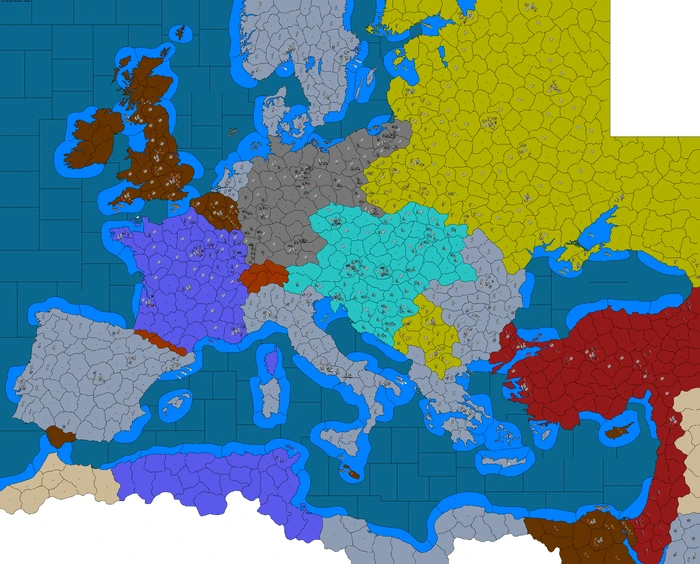
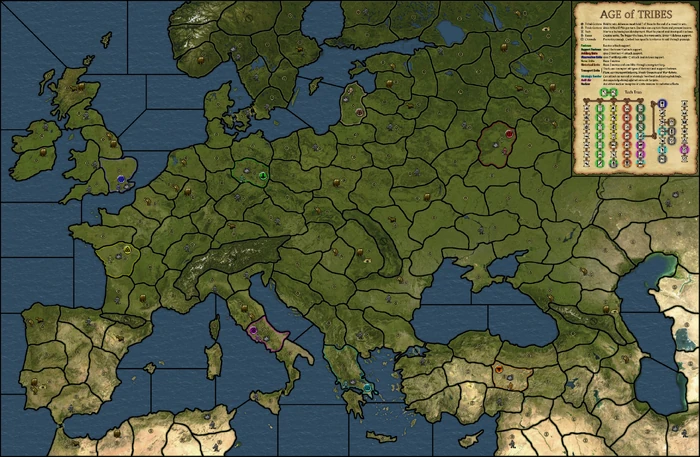
Name Age of Tribes: Renaissance
Description Struggle for control of Europe with Civilization-style tech
https://axisandallies.fandom.com/wiki/Age_of_Tribes:_Renaissance

Good Points
- Lots of unit types to develop
Bad Points
- Units are often too similar
- Uninteresting East vs West alliance
-
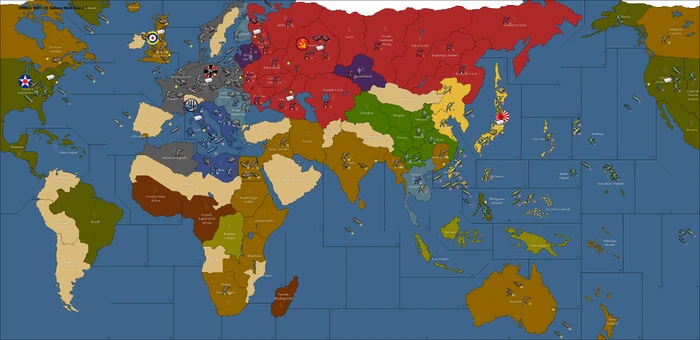
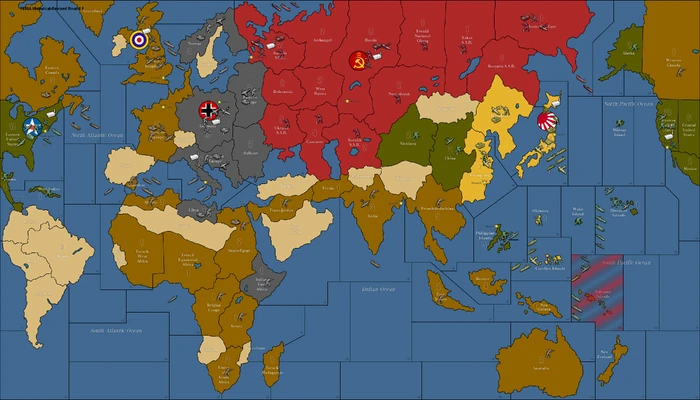
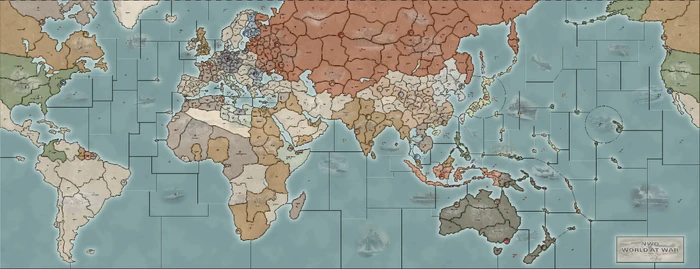
Name WW2 Path to Victory
Description World War II starting on 1941 on a modified version of the Global map with modifications to improve balance
https://axisandallies.fandom.com/wiki/WW2_Path_to_Victory

Good Points
- Balanced
- Lots of interesting rules tweaks
Bad Points
- AI has trouble with handling the Chinese guerillas rule
Note: I my opinion this is the best World War 2 scenario
-
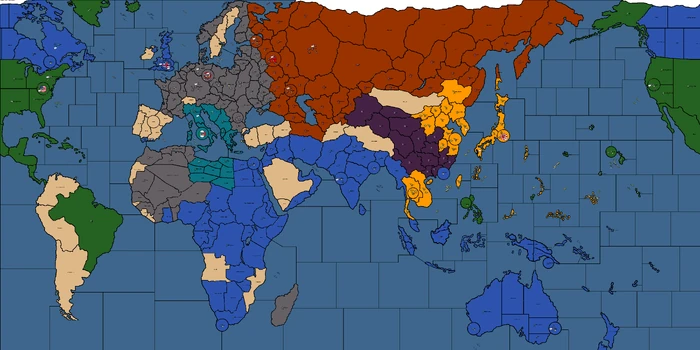
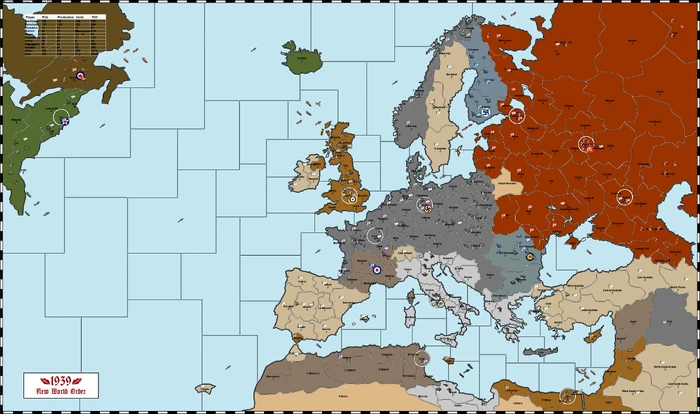
Name New World Order Variant - Neutrals Unassigned
Description World War II in Europe starting in 1939 with many nations neutrals that will defend themselves against both side.
https://axisandallies.fandom.com/wiki/New_World_Order_Variant_-_Neutrals_Unassigned

Good Points
- A good selection of units
Bad Points
- The AI gets distracted by pointless attacks on neutral nations
-
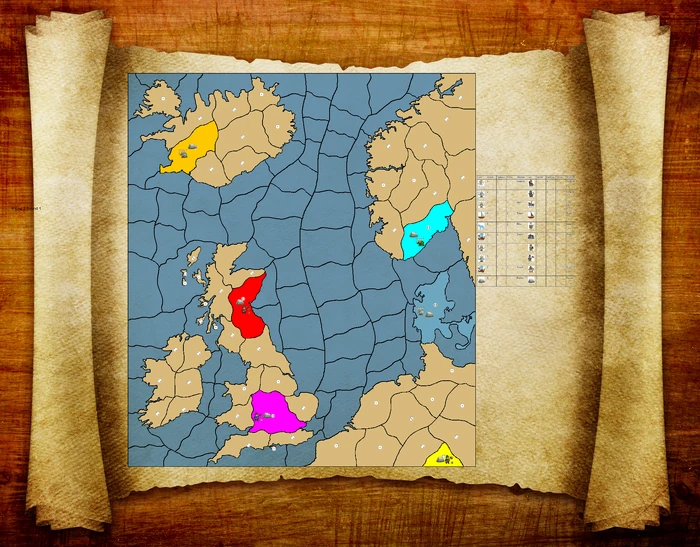
Name Great Northern War
Description The Great Northern War
https://axisandallies.fandom.com/wiki/Great_Northern_War

Good Points
- Not just another WW2 game
Bad Points
- The Swedes have little chance
- No sense of the realities of 18th century warfare or the tactical skill of Charles XII
-
Name Napoleonic Empires
Description The Napoleonic Wars

https://axisandallies.fandom.com/wiki/Napoleonic_Empires_(Main_Scenario)Good Points
- Conflict all over the map
- Reasonably balanced
- Pretty Units
Bad Points
- No sense of actual Napoleonic War operations and tactics
- None of the diplomatic points of the war
-
@rogercooper I'll add that a Napoleonic scenario simply cannot be a two-sided (1v1) game unless it both starts very late (like in 1812, at the start of the invasion of Russia) and has 1940-like delays for factions actively to join in the war. A simple two-sided game would work for the Hundred Days (War of the Seventh Coalition).
Having an early Napoleonic game as a simple 1v1 with no delays and no politics makes no sense: it needs to be a FFA or at least a game with many sides.
-
@cernel said in Roger's Scenario Thread:
@rogercooper I'll add that a Napoleonic scenario simply cannot be a two-sided (1v1) game unless it both starts very late (like in 1812, at the start of the invasion of Russia) and has 1940-like delays for factions actively to join in the war. A simple two-sided game would work for the Hundred Days (War of the Seventh Coalition).
Having an early Napoleonic game as a simple 1v1 with no delays and no politics makes no sense: it needs to be a FFA or at least a game with many sides.
This was one of the first TripleA mods. Now, there are tools that could handle some of the politics of the Napoleonics Wars, as well as some of its operational characteristics (give Napoleon the ability to increase the movement of units stacked with him). However, if I want area movement Napoleonic Wars, I could play Victory & Glory..
-
Name World War 2- Zombies
Description Based upon the game Axis & Allies & Zombies
https://axisandallies.fandom.com/wiki/Zombies-World_War_2

Good Points
- Randomly appearing zombies keeps the player on their toes
- One turn limit in ground combat, keeps the game at a more measured pace
- Infantry-only factories in Asia are interesting
Bad Points
- Doesn't implement many of the rules of AAZ
- The AI has trouble handling many of the rules
-
Name 300BC
Description The Mediterranean in 300 BC
https://axisandallies.fandom.com/wiki/300_BC

Good Points
- Nice unit images
- Not another WW2 game
Bad Points
- No feel for the realities of ancient warfare
- Strongly favors the Romans
-
@rogercooper said in Roger's Scenario Thread:
- Strongly favors the Romans
How did you come to that conclusion? I've never played it, yet I would rather say that the game is quite clearly in favour of Anti Roman if only because here Anti Roman is relatively much more powerful than in 270BC as a matter of starting quantities, because "warelephant" is both more powerful and less costly and because ships with movement 2 instead of 1 over-advantage Anti Roman even more if nothing else.
Is it that you actually believe that 270BC favours Roman even more strongly that this one?
I would also add "bad units balance for some of the units" amongst the bad points.
Do you ever buy "horsearcher" here? Beside horsearchers, other units (like "hoplite", "chariot" and "cataphract") are seriously under-powered (or over-priced).
-
@cernel I played 300BC both as a human and with the AI taking all sides. The problem is the isolation of the Seleucids. They start facing both Parthia & Egypt. Numidia is too weak and Carthage too distance to put enough pressure on Egypt to divert them from the Seleucids. Once the Anti-Romans rule the East, Rome is too behind in the income game.
270BC has the same problem. It can be interesting the play as the Romans against the AI, where a human player can generate enough momentum to make for the loss of their eastern ally.
The units are not well balanced and are not sufficiently differentiated between the nations.
There is also almost no strategic feel of pre-industrial warfare. Take a look at Greyhawk Wars for a game that does it right (within the limitations of the TripleA engine).
-
@rogercooper said in Roger's Scenario Thread:
There is also almost no strategic feel of pre-industrial warfare.
Since I'm making a game set in 1176 Europe, West Asia and North Africa (the year of the battles of Legnano and Myriokephalon), I'm curious in what is your list of things which should be part of a TripleA pre-modern game and what you believe should also be part of the same but is not possible in TripleA.
On 300BC, I'm at least as sure as I can be (without having played it) that that game is a lot more in favour of Anti Roman than 270BC, so I much doubt that it can be unbalanced in favour of Roman. It may be that you just didn't figure out how to play Seleucids very well, capitalizing on those offence/defence 1/1 and cost 2 units (the most cost-effective units in the game).
-
@rogercooper said in Roger's Scenario Thread:
270BC has the same problem. It can be interesting the play as the Romans against the AI, where a human player can generate enough momentum to make for the loss of their eastern ally.
I assume that here you got confused and actually meant "play as the Anti Romans", correct?
-
@cernel No, as the situation is biased against the Romans, playing the Romans is interesting. If played correctly, the Romans are knocking out the Macedonians before the Seleucids fall.
-
@cernel said in Roger's Scenario Thread:
@rogercooper said in Roger's Scenario Thread:
There is also almost no strategic feel of pre-industrial warfare.
Since I'm making a game set in 1176 Europe, West Asia and North Africa (the year of the battles of Legnano and Myriokephalon), I'm curious in what is your list of things which should be part of a TripleA pre-modern game and what you believe should also be part of the same but is not possible in TripleA.
Doable in TripleA
- Upkeep costs - Keeping armies in the field was expensive for all pre-modern states
- Stacking limits - The ability to keep armies fed limited their size
- Local forces - Under a 'feudal' system, forces were available locally for effectively no cost
- Fortifications - The difference between siege warfare and field warfare was important.
- Command Limits - Limiting the number of units that can be moved (which can mess up the AI)
Not doable in TripleA
- A more sophisticated combat model like in "Block" games
- A better consideration of events like in Card-driven wargames
- The way that mobile campaigns could sometimes be conducted
- Flexible rules for diplomacy and alliances
-
@rogercooper said in Roger's Scenario Thread:
@cernel No, as the situation is biased against the Romans, playing the Romans is interesting. If played correctly, the Romans are knocking out the Macedonians before the Seleucids fall.
I'm not sure I'm following you any longer or ever. Regarding 300BC, you said
@rogercooper said in Roger's Scenario Thread:
- Strongly favors the Romans
How can you say that 300BC strongly favours the Romans and then say that 270BC is biased against the Romans (if this is the case)? If anything, I think it is very clear that the Anti Roman Alliance is much better off in 300BC than in 270BC (for the reasons I've explained), that is I think that it is clear that the Anti Roman Alliance got "nerfed" going from 300BC to 270BC.
I originally assumed that by "the Romans" you meant the Roman Alliances (name changed to "Roman Alliance" in 270BC). Were you instead talking about the Roman Empire (name changed to "Roman Republic" in 270BC)? Are you now talking about the Roman Alliance or the Roman Republic when you say "the Romans"? Are we now talking about 270BC or 300BC?
I suggest avoiding using the name "Romans" in favour of the "Roman Alliances", the "Roman Alliance", the "Roman Empire" or the "Roman Republic". If you can backtrack and tell me what of those four were you referring to in the previous posts whenever you said "Romans", that is likely going to be helpful for me to understand you better.
-
@rogercooper said in Roger's Scenario Thread:
@cernel said in Roger's Scenario Thread:
@rogercooper said in Roger's Scenario Thread:
There is also almost no strategic feel of pre-industrial warfare.
Since I'm making a game set in 1176 Europe, West Asia and North Africa (the year of the battles of Legnano and Myriokephalon), I'm curious in what is your list of things which should be part of a TripleA pre-modern game and what you believe should also be part of the same but is not possible in TripleA.
Doable in TripleA
- Upkeep costs - Keeping armies in the field was expensive for all pre-modern states
- Stacking limits - The ability to keep armies fed limited their size
- Local forces - Under a 'feudal' system, forces were available locally for effectively no cost
- Fortifications - The difference between siege warfare and field warfare was important.
- Command Limits - Limiting the number of units that can be moved (which can mess up the AI)
Not doable in TripleA
- A more sophisticated combat model like in "Block" games
- A better consideration of events like in Card-driven wargames
- The way that mobile campaigns could sometimes be conducted
- Flexible rules for diplomacy and alliances
Very interesting list. I'll keep it as a reference for my game.
I would add also the fact that TripleA does not support land units impacting naval warfare while being cargo. In the age of sails and even more so before gun-powder became important in naval battles, what the ship was transporting would have influenced its combat prowess because the land units in the ships possibly were an important part of the actual combatants. For example, a ship transporting archers would be stronger in naval battles than the same ship transporting mostly horses.
An other limit is that TripleA does not support different types of cargo. For example, horses should be more easily transported by horse-transports than by other ships, so the horse unit should have a bigger size for the other ships than for the horse-transports or even being impossible to load regardless of its size.
I think that "stacking limits" should go in the "non-doable" list. It doesn't make sense to have the same limit unless every territory has the same production or such and it should not be a hard limit but rather timed. For example, you could spread out your armies so that they can live off the land and concentrate them at a same location just before a battle (even though they cannot stay there but for a few days without starving). However, I think that this limit is scarcely necessary for the high middle ages while the army is in a friendly territory because armies were quite small back then and were mostly paying for their stuff, so merchants would likely privately satisfy most needs thus siphoning stuff from other areas towards the armies.
By the way, cards are doable as long as everyone knows the card after it has been drawn: you can have a (fake) territory per card and use the random placement to decide what card somebody is getting. Such territories would be not real territories and connected to nothing so useless for the actual game, of course. For example, the card system of Risk would be 100% doable except for everyone knowing what cards you have in your hand.
Can you explain what you mean by "a more sophisticated combat model like in "Block" games"?
Hello! It looks like you're interested in this conversation, but you don't have an account yet.
Getting fed up of having to scroll through the same posts each visit? When you register for an account, you'll always come back to exactly where you were before, and choose to be notified of new replies (either via email, or push notification). You'll also be able to save bookmarks and upvote posts to show your appreciation to other community members.
With your input, this post could be even better 💗
Register Login