How much movement value for isSea units in antiquity scenario?
-
@torpedoa
I will assume you are talking using the NWO map, where 2 land areas, sort of equate to 1 sea area, so I say isSea should move 1. Warships also usually beached for the night.However I suggest you use a transport ship for invasions as cavalry units cannot travel on tri/quad/quinqriremes.
1 movement might be slow but, embarking/disembarking and finding the right type of beach also takes a long time, so for NWO, 1 movement is fine.
I would also suggest infantry take up 1 unit of space for transport and cavalry 3, as this is more historical, than a 1:2 ratio.
-
-
@thedog @alkexr
thy both, so 1 movement is it then.
If you dont mind to give another opinion of the transport capacity difference between those types of ships furthermore the combat values you would set.
Keep in mind that i have also every unit capable of doing air combat (airAttack and airDefense) which is kinda simulating ranged combat / skirmish before normal battle (melee, boarding in this case).
Til now i have set them to:
Galley 4/4/1 (air=2/2) transportcapacity = 12
Longship 2/2/1 (air=1/1) transportcapacity = 6 -
@torpedoa
Romans and Carthaginians used slaves as rowers, so only the marines would fight. As an aside the early Greeks rowers typically were volunteers so would fight as light infantry.The Celts and Germans all crew would fight, they had about 20-40 crew/marines.
A Quadreme had about 75 marines.
I dont think the fire power for the longships is representative as they would be rowing.
Having said the above, Im not sure the Celts would have longships in 148bc, they might of had transport ships though or maybe shortships with smaller crew.
-
Let's clear up some misconceptions about ancient naval warfare.
-
Ancient ships were quite mobile. Ships could sail from Greece to Egypt in 3 days. Fleets were faster than land forces. The real limitation was the need to operate from a friendly coast as ships would normally be beached at night. In TripleA terms, a move of 1 with speed boost of 2 from friendly cities would be reasonable.
-
Ancient fleets did not make large scale use of slaves. I have read many accounts of ancient naval warfare and none mention the use of slaves. (Freed slaves were sometimes used).
-
Rowers did not generally play a direct role in naval battles. They were busy below decks manning the oars. However, they were part of the force, and could be useful in land action as light infantry.
-
Nobody had longships in 148BC. They don't start to appear until the 6th century AD. The Celts did not have specialized warships, which put them at a disadvantage in naval battles.
-
-
@torpedoa I would say just tell how long in time a round is supposed to be, on average, and how wide a sea zone is on average, and you can have the answer yourself. You may assume something like 2 km per hour of movement over the whole time (taking into accont pauses for various reasons like bad weather). Or you can take historical records of how much time it took to make from some place to an other one, instead of making speed assumptions.
@RogerCooper I surmise 3 days from mainland Greece to Egypt must have been about the fastest time you can get with the fastest ship (like a huge rowed galley, maybe a septireme, rowing without pause and with favourable weather, I guess). Athens to Alexandria is 950 km, so 72 hours would be a speed of over 13 km/h, which is arguably about the fastest speed the fastest Ancient ships may achieve on short circuits. Maybe it has been recorded because it was a particularly fast voyage or even what we would call a stunt?
-
@rogercooper "The earliest rowed true longship that has been found is the Nydam ship, built in Denmark around 350 AD."
(From Wikipedia)If i start at 150 BC and Marian Reforms are at around 100 BC, which is turn 10 in my game, then i could introduce longships for germanic (eventually celts too) tribes only at turn 90 if i want to be historical consistent.

Even if i put turn 5 Marian Reforms it would be turn 45 to get longships.I have to get rid of historical accuracy at some point for sure here.
Or i just use this from wikipedia:
"The first longships can trace their origin back to between 500 and 300 BC, when the Danish Hjortspring boat was built."
But this not rowed but paddled. -
@torpedoa Well, you've answered yourself here... If one round is representing 5 years, then you can just set the ship movement to infinite: there is not enough geography to restrict any ship from going wherever it can on whatever realistic map, in 5 years.
-
@cernel
 ................:man_facepalming_light_skin_tone: (me)
 -
@cernel 3 days would be from Crete to Alexandria, with a favorable wind.
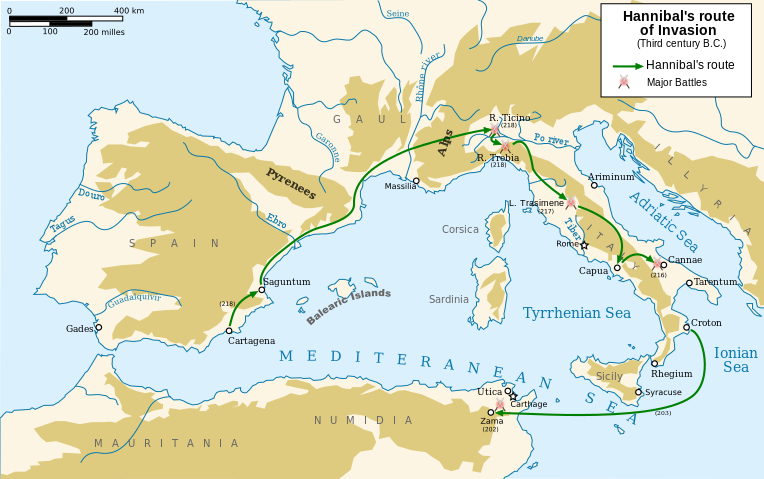
The movement allowances in ancient games are generally too low. Hannibal went from southern Spain to Northern Italy in 1 year.
@TorpedoA No one was going long distances under oar. Triremes and longships were primarily sailing vessels.
Oared vessels had a bid advantage in combat, because they were not dependent on the wind and could ram. Caesar's campaign against the Veneti showed the vulnerability of pure sailing ships to even small, hastily built oared vessels. It was only with the development of large ships in the late Middles Ages that sailing ships could fight oared ships.




Hello! It looks like you're interested in this conversation, but you don't have an account yet.
Getting fed up of having to scroll through the same posts each visit? When you register for an account, you'll always come back to exactly where you were before, and choose to be notified of new replies (either via email, or push notification). You'll also be able to save bookmarks and upvote posts to show your appreciation to other community members.
With your input, this post could be even better 💗
Register Login