Roger's Scenario Thread
-
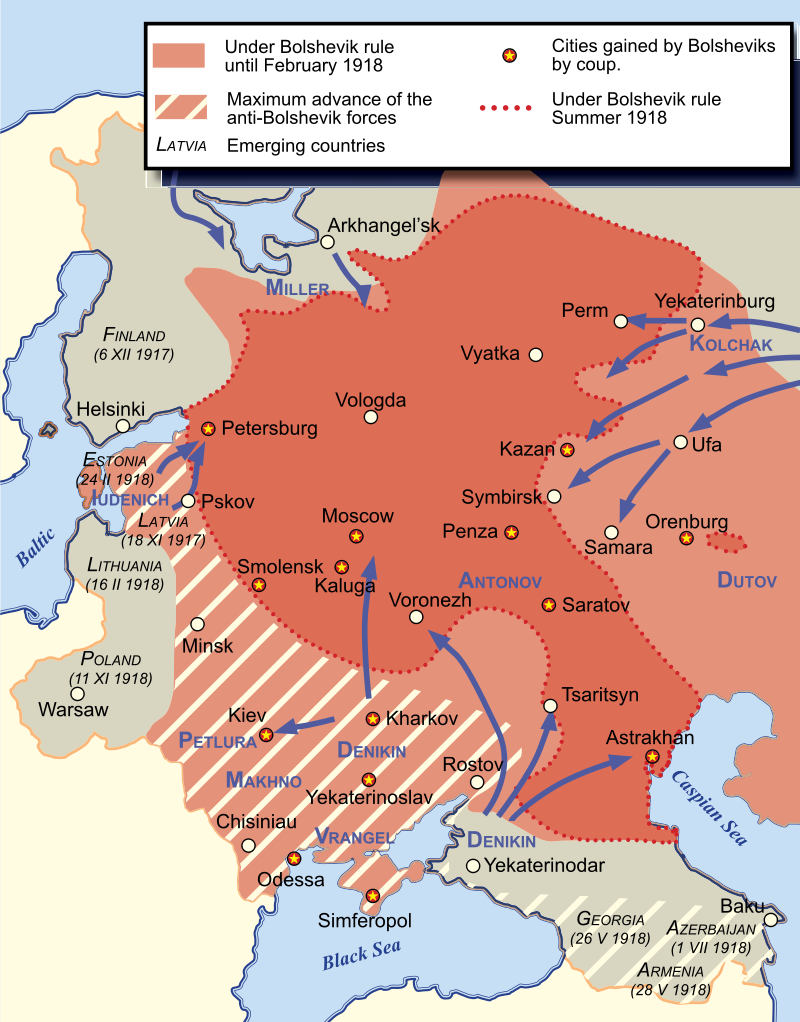
@schulz If you want to show the October revolution, you need an event that destroys the Russian army and either sets up the Russian Civil War in a plausible way, makes Russia impassable (as in Axis & Allies: 1914) or dumps large numbers of neutral units in Russia.
Giving the Reds a large force with substantial income in Siberia in 1914 is a completely gamey solution which has no basis in historical reality.
This map gives a better sense of the situation
-
I think the current one is a lot better than any alternative for gameplay reasons.
If the Bolshevik Revolution was depends on the situation on the Eastern front, then almost all CP player would just prioritize it to happen to close one front quickly and gain new ally (Communists).
Also it isn't realistic either setting up Communists neutral towards CP because Germany has still kept significant forces on the East even after signing of The Brest-Litovsk due to mistrust towards the Bolsheviks.
-
@prastle said in Roger's Scenario Thread:
@rogercooper as a minor thought. Do you mind if I add all links that you post to the top of the thread? Great job btw! Example …
Name Age_Of_Sturlungs_0.0.3
Description13th Century Icelandic Civil War. I added victory conditions
Download
https://forums.triplea-game.org/topic/889/roger-s-scenario-thread/www.rogercooper.com/Age_Of_Sturlungs_0.0.3.zipYou can, but I have been bringing my scenario collection over to the repository.
-
@schulz The rule in AA1914 prevents the Germans from gaining any more territory after the Russian Revolution, which limits the advantage of an eastern strategy.
Optional Rule-The Russian Revolution
Russia, already under great social and economic stress, may incur such desperate conditions that a Bolshevik revolution
ignites. The revolution will occur at the end any Russian turn starting in round four if Russia is losing the war. Russia will be
considered to be losing the war if all of the following conditions are met:
• Three or more territories adjacent to Moscow are controlled by the Central Powers.
• At least one other original Russian territory is controlled by the Central Powers or contested.
• Moscow is controlled by Russia or contested.
If the revolution occurs, the Imperial government is replaced with a republic. As a consequence of this, an armistice will be
signed with the Central Powers, effectively removing Russia from the war, and the game. All Russian units outside of original
Russian territories or Russian-controlled territories are immediately removed from the board, and Russia will no longer have
a turn. The Central Powers may no longer attack Russian units or move units into territories controlled by Russia. Central
Powers forces can move into or out of territories contested between them and Russia at any time. Russian units will not
participate in any battles occurring in such territories. Rules restricting land unit movement out of contested territories (see
page 15) no longer apply to Russian territories; however, the Central Powers must maintain at least one infantry unit in each
such territory at all times. Central Powers continue to collect income for any Russian territories they control, but they do not
collect income from contested territories. -
Name Twelve Clans-Coaltions
Description Japan in the Sengoku era
link
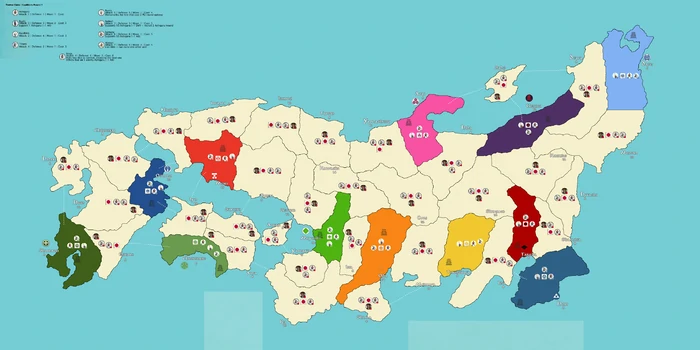
Good Points
- Interesting units with nice art
Bad Points
- Does not capture important elements of war in Sengoku period, such as fortresses, terrain and finances.
-
Name Cold War
Description Hypothetical WW3 in Europe (without nukes)
link
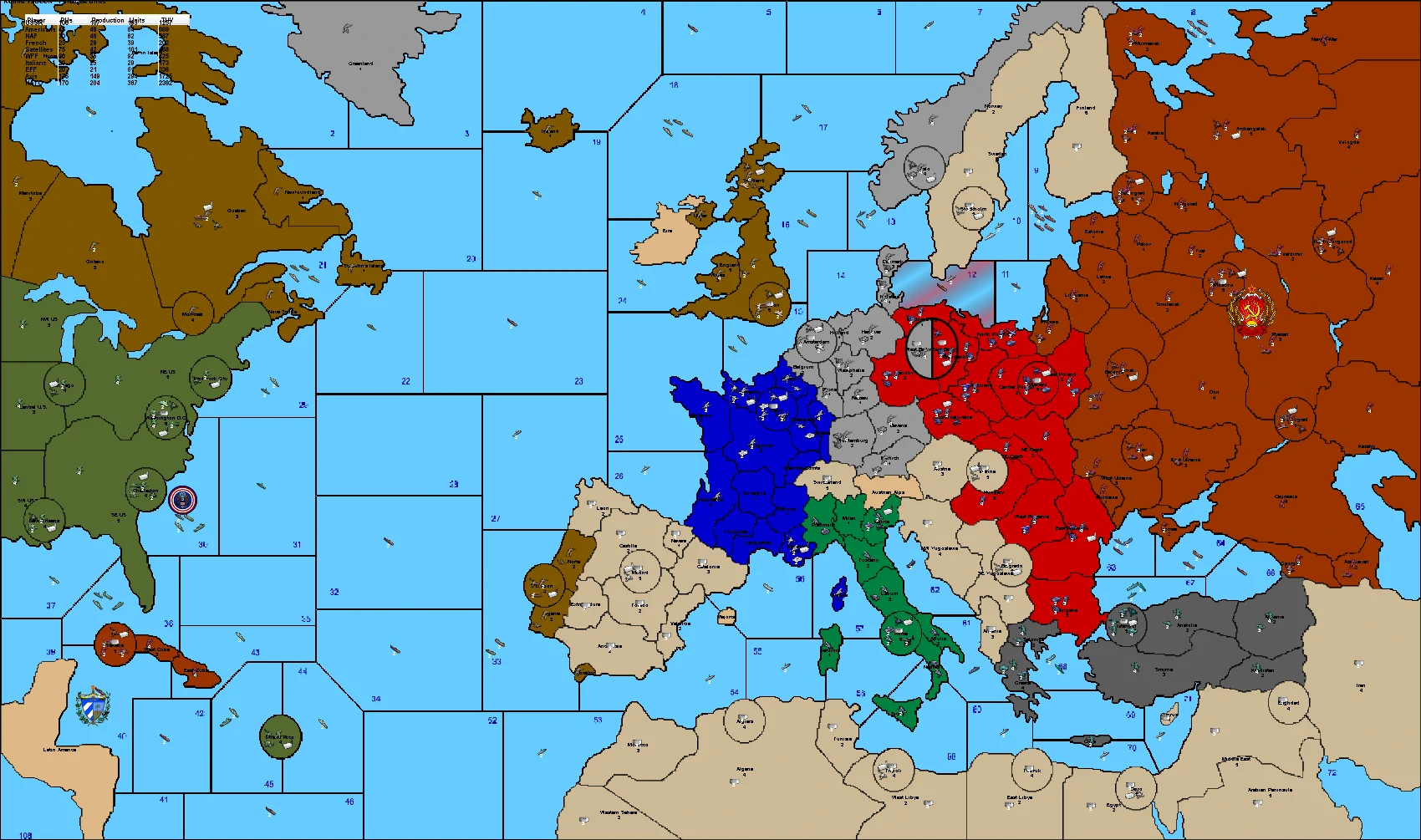
Good Point
- Plausible hypothetical situation
- Straightforward Rules Set
Bad Points
- Insufficient strategic tension, the game tends bog down with Europe divided down the middle.
-
Name Alagaësia (4 players)
Description Warfare in a fantasy world
link
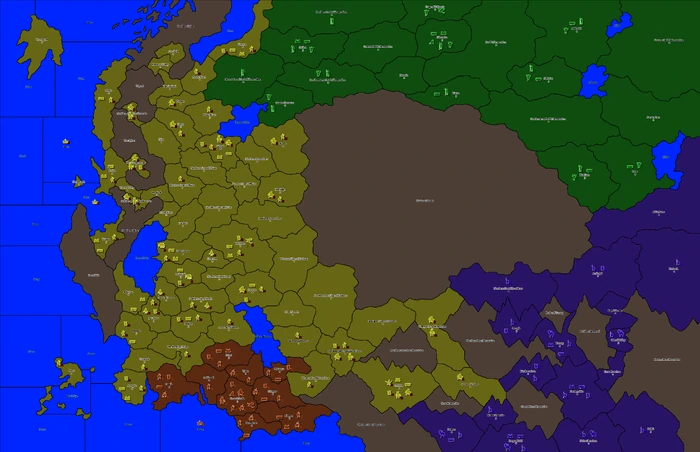
Good Points
- Balanced
- Varied, thematic units
- Fantasy air units make for interesting play
- Impassable mountains channel attacks in interesting ways.
Bad Points
- Unrestricted builds result in annoying, unthematic mega-stacks
-
Name Global 40 House Rules with Canada
Description Global 40 House Rules with Canada
https://axisandallies.fandom.com/wiki/Global_40_House_Rules_with_Canada
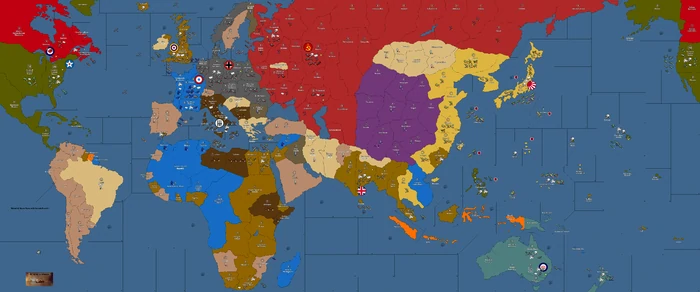
Good Points
- Some interesting rules
Bad Points
- Some of the rules are buggy or contradictory
-
@rogercooper Give an example of the rules contradicting themselves?
-
@board-3659 said in Roger's Scenario Thread:
@rogercooper Give an example of the rules contradicting themselves?
Even though I had unchecked Spheres of Influence, the rule was still active, probably because of some other option I chose. There also seemed to be some problem with Air Battles.
In general, my preference would be having a cohesive set of rules options are already chosen, that work well together.
-
@rogercooper yea if "Option Redesign" is selected, it'll auto activate a majority of options. "BM Rules" I think activates or overrides the selection of some others. It's explained in the Game Notes.
-
@rogercooper Yeah
-
Name Big World : 1942 - Factions (Axis)
Description Big World Map with many playable nations
link
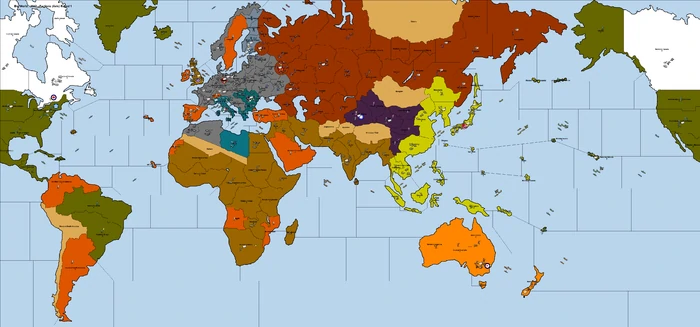
Good Points
- Lots of playable nations with interesting things to do
Bad Points
- A difficult struggle for the Allies
-
@schulz @RogerCooper I'm not an expert on WW1. Did Germany assume France was the weaker half of the French/Russian alliance and think it was better to strike there first? Was France in fact the weaker half? Did the Germans underestimate British help to France?
-
@andrewthree said in Roger's Scenario Thread:
@schulz @RogerCooper I'm not an expert on WW1. Did Germany assume France was the weaker half of the French/Russian alliance and think it was better to strike there first? Was France in fact the weaker half? Did the Germans underestimate British help to France?
German strategic thinking was rather weak. The France first strategy was based on the idea that France could be knocked out quickly like in 1870, while the German armies would be lost in Russia's vast spaces, like 1812. The violation of Belgian neutrality was decided casually, without consideration of British intervention.
All the European powers assumed a short war "Home Before the Leaves Fall" with the examples of the Russo-Japanese War, the Balkan Wars, the Russo-Turkish War & the Franco-Prussian War. The American Civil War was ignored in Europe.
In WW1, France was stronger than Russia. France's military expenditure in 1914 was 50% higher. Russia had the larger economy, but the inefficient government of the Tsars could not turn it into an effective military force.
In almost any realistic WW1 game, it makes more sense for the Germans to stand of defense in the West and attack Russia.
-
Name WW2 Path to Victory
Description The Global game on a modified map
https://axisandallies.fandom.com/wiki/WW2_Path_to_Victory
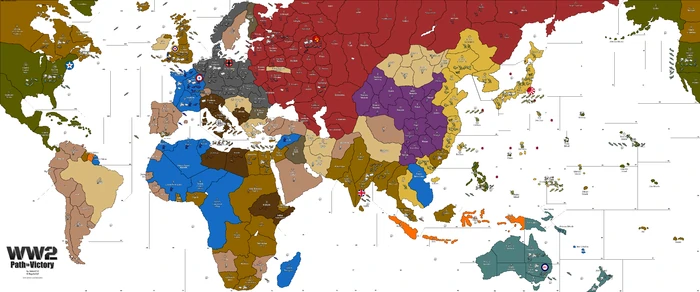
Good Points
- Better balance than the Global game
- Lots of areas in Russia to fight over
Bad Points
- The big stacks of air in the Far East
-
They though Germany couldn't sustain a two-front war for a long time hence either France or Russia has to be quickly defeated. Russia cannot be defeated within 6 weeks while Germany had a good chance to defeat France. I think they did the right decision by striking France first. Britain had a very small army at that time which couldn't do much if France is going to be quickly defeated.
-
@schulz The problem the Germans faced is that France could not be defeated in 6 weeks either, unless they had a leader as incompetent as Louis Napoleon. The Germans had already wargamed this out and knew that their plan could not take Paris in a single campaign.
What they really needed to do was to plan for a multi-year war, with attainable objectives for the initial campaign. Keeping Britain neutral as long as possible should have been viewed as being of the utmost importance, as Britain had larger economy than France or Russia and the blockade would eventually wear down the Germans.
The Germans also lacked any flexibility in their planning. The political circumstances of the war favored the Germans, as the assassination of Archduke Ferdinand was act of state-sponsored terrorism which was unpopular in Europe. A limited campaign in Russia and direct support of Austria would have been an easy victory for the Germans.
-
@rogercooper Paul Kennedy said Germany's economic/military strength relative to France and Russia was less in 1914 than in 1900. I get a sense that there was a certain seige mentality in Germany toward the rest of Europe. At one time Bismark had France isolated but now Germany had tied itself to Austria. Was there a pessimism about Germany's ability to win a long war? I have also read that Europe's powers attached a lot of importance to mobilizing and attacking before one's adversary. Meaning once the plan was in motion there was great reluctance to stop or change it. In addition it seems there was a German tendency in both world wars to think their great military prowess would make up for any and all strategic/diplomatic sloppiness.
-
@rogercooper I wonder then why did they try to knock France out of war in the first 6 weeks of the war if their war games showed that it is impossible?
Did they consider the original Schlieffen plan or Moltke's altered Schlieffen plan in ther wargames? Since Germany actually has never executed the original Schlieffen plan.
Even if Germany didn't violate the Belgian neutrality, I am almost certain Britain would still join the war.


Hello! It looks like you're interested in this conversation, but you don't have an account yet.
Getting fed up of having to scroll through the same posts each visit? When you register for an account, you'll always come back to exactly where you were before, and choose to be notified of new replies (either via email, or push notification). You'll also be able to save bookmarks and upvote posts to show your appreciation to other community members.
With your input, this post could be even better 💗
Register Login