Roger's Scenario Thread
-
@rogercooper said in Roger's Scenario Thread:
@cernel said in Roger's Scenario Thread:
@rogercooper said in Roger's Scenario Thread:
There is also almost no strategic feel of pre-industrial warfare.
Since I'm making a game set in 1176 Europe, West Asia and North Africa (the year of the battles of Legnano and Myriokephalon), I'm curious in what is your list of things which should be part of a TripleA pre-modern game and what you believe should also be part of the same but is not possible in TripleA.
Doable in TripleA
- Upkeep costs - Keeping armies in the field was expensive for all pre-modern states
- Stacking limits - The ability to keep armies fed limited their size
- Local forces - Under a 'feudal' system, forces were available locally for effectively no cost
- Fortifications - The difference between siege warfare and field warfare was important.
- Command Limits - Limiting the number of units that can be moved (which can mess up the AI)
Not doable in TripleA
- A more sophisticated combat model like in "Block" games
- A better consideration of events like in Card-driven wargames
- The way that mobile campaigns could sometimes be conducted
- Flexible rules for diplomacy and alliances
Very interesting list. I'll keep it as a reference for my game.
I would add also the fact that TripleA does not support land units impacting naval warfare while being cargo. In the age of sails and even more so before gun-powder became important in naval battles, what the ship was transporting would have influenced its combat prowess because the land units in the ships possibly were an important part of the actual combatants. For example, a ship transporting archers would be stronger in naval battles than the same ship transporting mostly horses.
An other limit is that TripleA does not support different types of cargo. For example, horses should be more easily transported by horse-transports than by other ships, so the horse unit should have a bigger size for the other ships than for the horse-transports or even being impossible to load regardless of its size.
I think that "stacking limits" should go in the "non-doable" list. It doesn't make sense to have the same limit unless every territory has the same production or such and it should not be a hard limit but rather timed. For example, you could spread out your armies so that they can live off the land and concentrate them at a same location just before a battle (even though they cannot stay there but for a few days without starving). However, I think that this limit is scarcely necessary for the high middle ages while the army is in a friendly territory because armies were quite small back then and were mostly paying for their stuff, so merchants would likely privately satisfy most needs thus siphoning stuff from other areas towards the armies.
By the way, cards are doable as long as everyone knows the card after it has been drawn: you can have a (fake) territory per card and use the random placement to decide what card somebody is getting. Such territories would be not real territories and connected to nothing so useless for the actual game, of course. For example, the card system of Risk would be 100% doable except for everyone knowing what cards you have in your hand.
Can you explain what you mean by "a more sophisticated combat model like in "Block" games"?
-
I would add also the fact that TripleA does not support land units impacting naval warfare while being cargo. In the age of sails and even more so before gun-powder became important in naval battles, what the ship was transporting would have influenced its combat prowess because the land units in the ships possibly were an important part of the actual combatants. For example, a ship transporting archers would be stronger in naval battles than the same ship transporting mostly horses.
A good point but there was always a distinction between combat ships and transport ships.. You can assume that any combat ship has enough troops to be effective.
An other limit is that TripleA does not support different types of cargo. For example, horses should be more easily transported by horse-transports than by other ships, so the horse unit should have a bigger size for the other ships than for the horse-transports or even being impossible to load regardless of its size.
TripleA can handle that. Just give horses a higher transport cost, so high that only dedicated transports can carry them. Note that there were no dedicated horse transports, instead existing merchants ships woudld be modified.
I think that "stacking limits" should go in the "non-doable" list. It doesn't make sense to have the same limit unless every territory has the same production or such and it should not be a hard limit but rather timed. For example, you could spread out your armies so that they can live off the land and concentrate them at a same location just before a battle (even though they cannot stay there but for a few days without starving). However, I think that this limit is scarcely necessary for the high middle ages while the army is in a friendly territory because armies were quite small back then and were mostly paying for their stuff, so merchants would likely privately satisfy most needs thus siphoning stuff from other areas towards the armies.
Armies were not always so small. Mega-stacks are not realistic in WW2 but even less so in pre-industrial armies. Check out the stack tax of Greyhawk wars.
By the way, cards are doable as long as everyone knows the card after it has been drawn: you can have a (fake) territory per card and use the random placement to decide what card somebody is getting. Such territories would be not real territories and connected to nothing so useless for the actual game, of course. For example, the card system of Risk would be 100% doable except for everyone knowing what cards you have in your hand.
That would more easily handled by random events which TripleA can do. CDW's are often more sophisticated.
Can you explain what you mean by "a more sophisticated combat model like in "Block" games"?
I suggest picking up the game Blocks!: Julius Caesar either on Steam or the physical board game. This game has a number of clever features despite fairly simple rules. The combat model is a clear improvement on TripleA. (note that the AI the computer version is weak) -

-
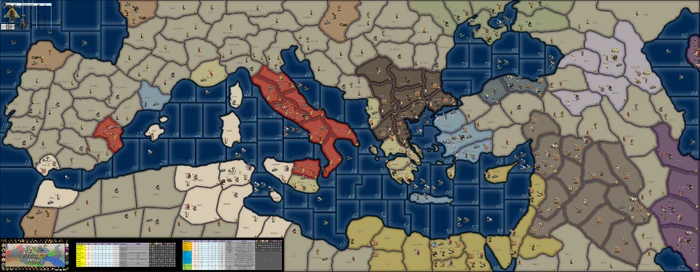
@rogercooper Thanks for the interest and feel free to show more, but this map is approximative and also quite wrong. I can easily spot over 10 mistakes in it if this is meant to be 1176 (but it is not too bad just to have a broad view at the big picture).
-
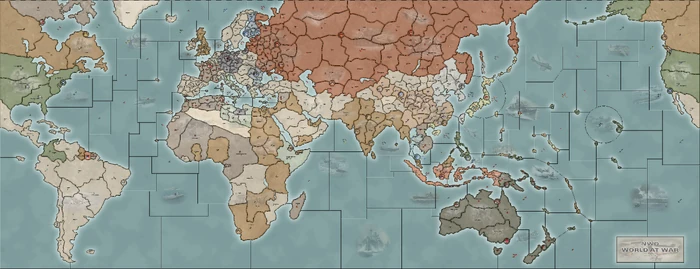
@cernel This is from the geacron.com. I have a better quality map at Centennia Historical Atlas, but I am having trouble getting it to work now. I will post the map when I get it to work..
Good luck on your mod. Here is a more detailed Mediterranean focused map.

-
This map was drawn in 1154.

-
@rogercooper Yes, I know the map of Ruggero Altavilla (as it is called in Italian), actually made for him by a Muslim. I was actually thinking to use it to create the relief tiles for my game, but I could not find a version of this map big enough for it. If I make repeating tiles which are too small, then it is very apparent that they keep repeating itself (so it's lame), so I would need a very big image of the map you posted (something like the image you posted but 20,000 pixels wide or more and of very good quality).
My map itself spans from the 24.02 to the 64.02 parallel and from the -10.77 to the 51.73 meridian. Practically, the borders are given, on the south, by the first cataract of the Nile and, on the east, by the mouth of the Ural river. This means that the border on the south is a parallel about in the middle of the Sahara desert and the border on the east is a meridian about in the middle of the Caspian sea. On the north the map is extended to comprise at least enough around Trondheim, and on the west the map is extended to comprise all mainland Ireland so all continental western Europe as well.
I chose the equirectangular projection.
-
-
@rogercooper That looks pretty good if a touch monotone (but maybe can be tweaked enough). Thank you. If you find an other version which may be better, let me know.
The other problem is that, as I plan my map to be 40,000 per 32,000 pixels, it will probably go over the 1 GB limit in GitHub with the relief tiles alone. I wonder if TripleA accepts JPG or other formats than PNG for the relief tiles. Otherwise, I'll have to search for programs to try to reduce the weight of the PNG images.
-
@cernel said in Roger's Scenario Thread:
as I plan my map to be 40,000 per 32,000 pixels
I've reconsidered: I'll probably go for 20,000 per 16,000 because it's almost impossible for me to work and save with GIMP at 40,000 per 32,000 with dense images. Even so, that image is just barely big enough, as I've cut a 10,000 per 8,000 portion out of it for the land (in Asia), and it could not have been much bigger than that. Besides, I've not yet decided if I really want to have relief tiles. Relief tiles are depressing when you find something that you want to change on the basic drawing but you have already made them, and that's what is most likely going to happen...
-
If you vector draw your baseTiles, then you can easily add a half way version of reliefTiles with Inkscape as here;
https://forums.triplea-game.org/topic/3318/easier-map-making-with-inkscape-reusable-art-assets/8 -
@thedog The basic map (not the details) is currently raster 10,000 per 8,000, but I intend to vector it to then scale it to 20,000 per 16,000, and thereafter finalize the details (comprising the relief tiles) which I'm already making at that scale. However, beside this, I don't see a reason not to go back to raster after the scaling because it's not like TripleA supports vector images anyway, so why make the details as vectors instead of raster? Bear in mind that I've never worked on any vector graphics at all.
Are you saying that vector Inkscape is faster and lighter on the memory requirements while working on images than raster GIMP? The raster image which should eventually become the relief tiles is currently a PNG of 631 MB and working on it and saving it with GIMP is quite a slow process.
-
I had never done any raster or vector work until recently, people on these forums said I should use raster for baseTiles, I had mixed results.
Then I tried Inkscape and found my brain can pickup how to work it.
As vectors are objects its easy to pick all or part of the "image" and resize or stretch them.
In my opinion
- Vector is the best way to draw baseTiles
- Raster is the best way to draw reliefTiles
- But if you have no graphic talent, like me, then Vector based reliefTiles can produce a reasonable version, with probably a saving in size, due to the way it stores its data. This method will have both a vector save and a raster export. Also if the baseTiles change its easy to change the matching layer of the reliefTiles to overlay it.
Regarding learning Inkscape it took me less than a month to learn the basics, as can be seen from the thread date stamps.
-
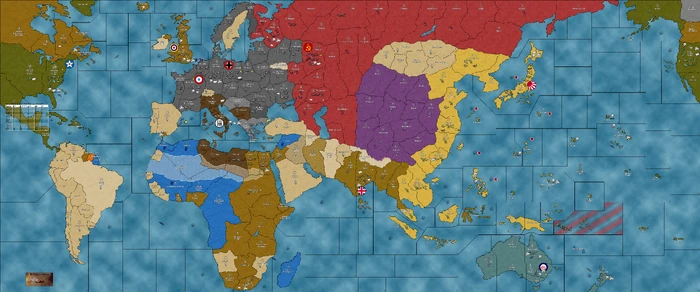
Name 2020
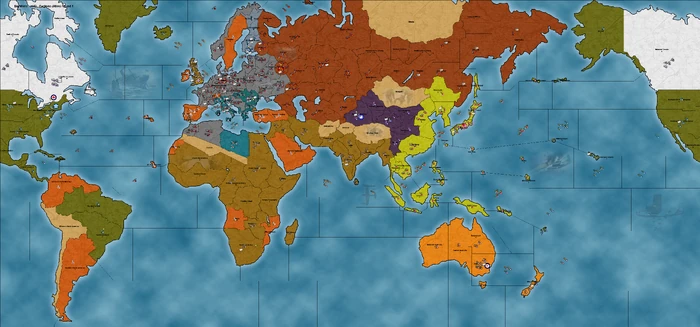
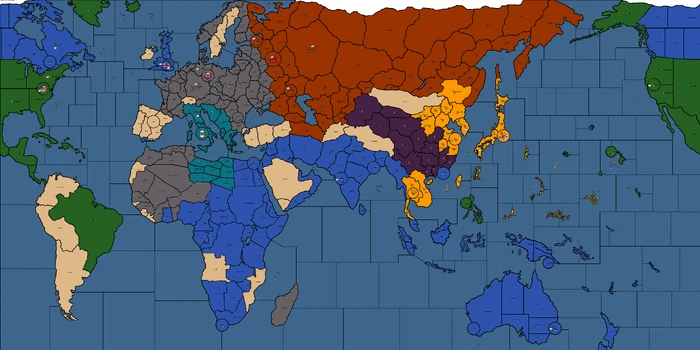
Description An alternate history where Europe and a Canadian-led alliance face Russia & China on the Revised map.
https://axisandallies.fandom.com/wiki/2020

Good Points
- Easy to understand rules
Bad Points
- Too few fronts. With Japan indefensible, the game quickly becomes a shoving match in Europe.
- Favors the "Axis" strongly. Once the Pacific falls to China, the Axis has an income and geographical advantage and will shove the Europeans out of Germany to win.
-
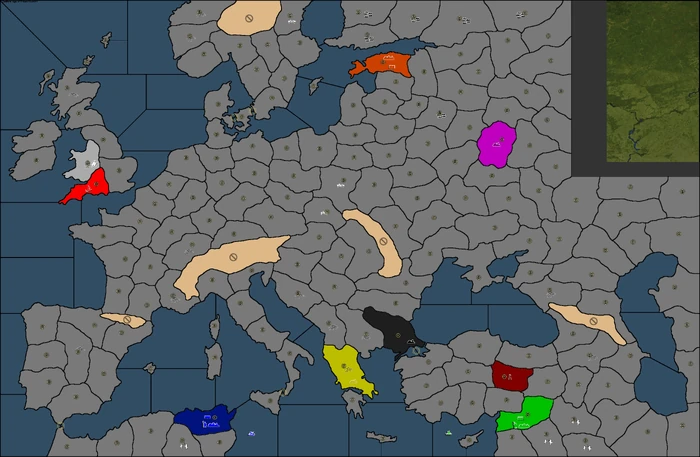
Name Twelve Clans
Description The Sengoku period
https://axisandallies.fandom.com/wiki/Twelve_Clans
Good Points- Interesting vassalage system avoids the problems of free for all play and feels historical
- Nice unit art
- Interesting unit abilities
Bad Points
- Stacks can get really big.
-
Name New World Order Variants - Neutrals Assigned
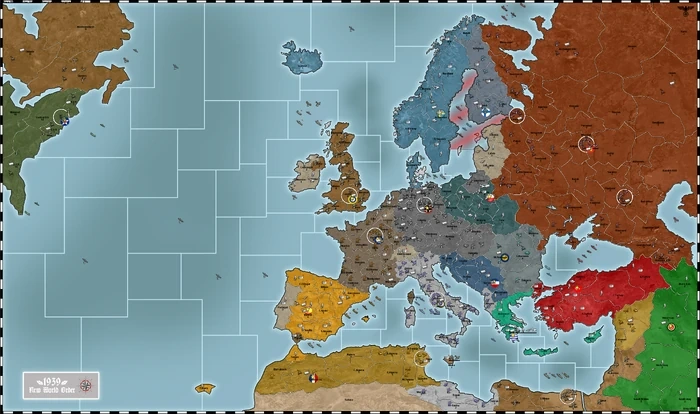
Description World War in Europe starting in 1939, with the neutral countries assigned to each alliance but unable to leave their homelands.
https://axisandallies.fandom.com/wiki/New_World_Order_Variant_-_Neutrals_Assigned

Good Points
- Interesting unit mix
- Fighting all over the map
Bad Points
- AI gets confused by the active neutrals
- Once France falls, it is hard for the Allies to reg
-
Name TC Blitzkrieg
Description Action on symmetrical map
https://axisandallies.fandom.com/wiki/TC.BLITZKRIEG

Good Points
- An interesting selection of units
Bad Points
- Connection glitches
- Symmetrical start limits possibilities
-
Name Wolfy's 1939
Description World War 2 in 1939 on the Big World Map with many neutral areas
https://axisandallies.fandom.com/wiki/Wolfy's_1939,First_Strike

Good Points
- The neutral areas have some interesting effects on play.
Bad Points
- Like most Big World scenarios, the Allied income advantage is not enough to overcome Russia's isolation.
-
Name World War I 1914
Description TripleA port of the Axis & Allies World Ware One game
https://axisandallies.fandom.com/wiki/World_War_I_1914

Good Points
- A reasonably good port of the boardgame
- One round limit on ground combat gives that WW1 feel
- Plays fairly quickly in TripleA
Bad Points
- The AI has trouble with the one round combat limit
- The ability of the British to build without limit in India seriously imbalances the game.
-
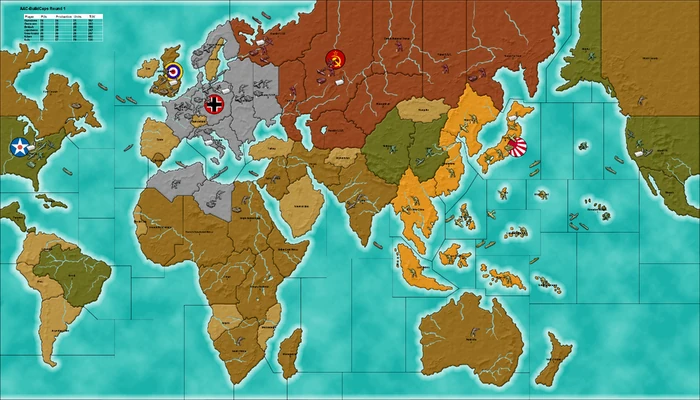
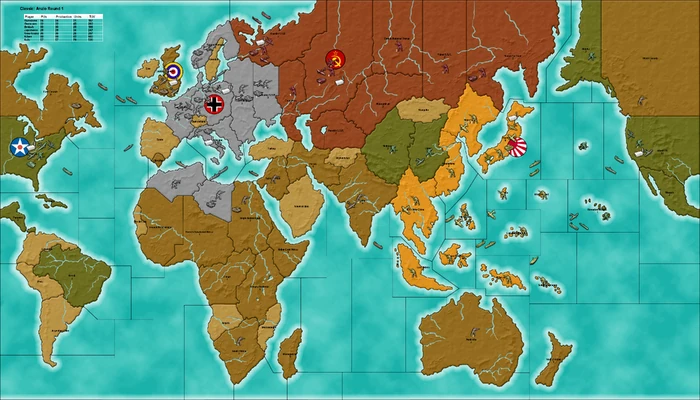
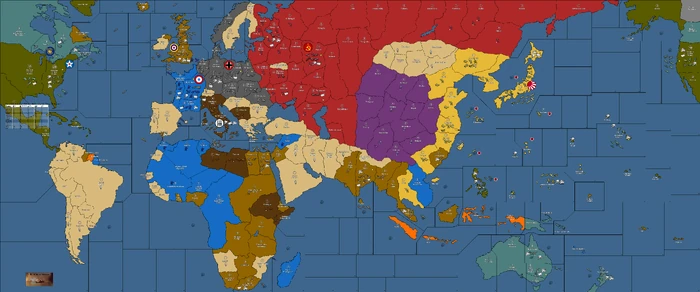
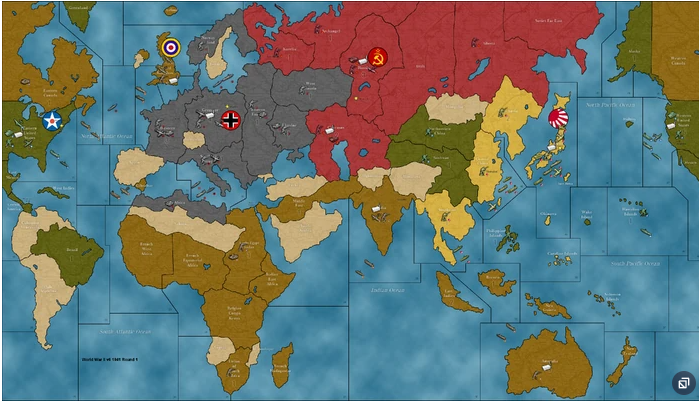
@rogercooper Do you think it's a bad point for Berlin to be closer to Moscow than Paris?
Hello! It looks like you're interested in this conversation, but you don't have an account yet.
Getting fed up of having to scroll through the same posts each visit? When you register for an account, you'll always come back to exactly where you were before, and choose to be notified of new replies (either via email, or push notification). You'll also be able to save bookmarks and upvote posts to show your appreciation to other community members.
With your input, this post could be even better 💗
Register Login