How would you rate countries and territories considering realism in big WWII maps.
-
Thank you for your informations.I would like to learn relative strengts of main combatans in the European front. Can we say that the British Empire and the US had the same power excluding the pacific front and lend-lease?
What would we say for the power of Nazi Germany-Italy-USSR and the British Empire in 1 Jun 1940 counting Vichy and other occupied areas?
-
@schulz The United States of America had way more power than all the British Empire combined, and increasingly so the more you value oil production. The U.S.A. alone, to which you would probably add several American Allies, should account for about 40% of the world's total production.
-
@cernel said in How would you rate countries and territories considering realism in big WWII maps.:
@schulz The United States of America had way more power than all the British Empire combined, and increasingly so the more you value oil production. The U.S.A. alone, to which you would probably add several American Allies, should account for about 40% of the world's total production.
Yes it is true I have been searching for power comparison between the British Empire and the US considering these factors.
-Pacific front: Excluding all Pacific investments for both sides
-Exiled allies: Adding them (Free France, Poland, Greece, Netherlands etc...) into the British Power
-Lend Lease: Counting everything that delivered to other allies from the US as their domestic productions.Consiering these factors realistically how powerful was the US compared to the British Empire or the Soviet Union?
-
@schulz The Soviet Union lost almost half of its production in 1941, so that varies a lot depending if the game starts before or after Barbarossa.
-
The best starting date is for big wwii maps imho 1 July 1940 since presence of new installed vichy france would give variety of strategies. I don't like to see Vichy as part of Germany in big maps. Then no need to add Free France, Dutch, Belgium etc...
The Soviets did lose almost half of their productions but they did also enormously increase their production capacities like the US did it after 1941.
It would be better considering 1 July 1940 for me.
-
@schulz Here is the data from the correlates of war database
Nation Steel Production Military Expenditure Military Personnel Energy Consumption Population Urban Population
Argentina 0.0% 0.2% 0.5% 0.3% 0.9% 2.1%
Belgium 2.3% 0.2% 0.7% 1.5% 0.5% 0.4%
Brazil 0.1% 0.2% 0.8% 0.2% 2.6% 1.9%
Bulgaria 0.0% 0.1% 0.4% 0.0% 0.4% 0.1%
Chile 0.0% 0.1% 0.2% 0.1% 0.3% 0.4%
China 0.0% 0.5% 13.1% 1.8% 33.9% 8.9%
Colombia 0.0% 0.1% 0.1% 0.1% 0.6% 0.4%
Cuba 0.0% 0.1% 0.2% 0.0% 0.3% 0.5%
Denmark 0.0% 0.1% 0.1% 0.4% 0.2% 0.3%
Ecuador 0.0% 0.0% 0.1% 0.0% 0.2% 0.1%
France 5.9% 3.1% 5.1% 4.0% 2.7% 2.9%
Germany 17.7% 36.2% 24.2% 12.9% 5.2% 10.6%
Greece 0.0% 0.2% 0.9% 0.0% 0.5% 0.4%
Iran 0.0% 0.1% 0.3% 0.1% 0.9% 0.6%
Italy 1.7% 2.0% 5.1% 0.9% 2.9% 3.7%
Japan 5.0% 5.1% 8.4% 3.1% 4.6% 9.2%
Mexico 0.1% 0.1% 0.4% 0.4% 1.3% 0.9%
Netherlands 0.1% 0.3% 0.4% 0.8% 0.6% 1.0%
Norway 0.1% 0.2% 0.0% 0.3% 0.2% 0.1%
Peru 0.0% 0.0% 0.1% 0.0% 0.4% 0.2%
Portugal 0.0% 0.1% 0.4% 0.1% 0.5% 0.4%
Romania 0.2% 0.2% 1.3% 0.6% 1.3% 0.5%
Russia 13.1% 18.0% 15.7% 9.2% 11.1% 15.7%
Spain 0.4% 0.2% 4.7% 0.4% 1.7% 2.1%
Sweden 0.9% 0.3% 0.0% 0.6% 0.4% 0.4%
Switzerland 0.0% 0.1% 0.0% 0.3% 0.3% 0.3%
Thailand 0.0% 0.0% 0.3% 0.0% 1.0% 0.6%
Turkey 0.0% 0.2% 1.3% 0.1% 1.1% 0.5%
United Kingdom 10.0% 23.8% 3.5% 11.2% 3.1% 8.3%
United States of America 35.8% 3.0% 2.9% 42.1% 8.5% 16.9%
Uruguay 0.0% 0.0% 0.1% 0.0% 0.1% 0.3%
Venezuela 0.0% 0.0% 0.0% 0.1% 0.2% 0.2%
Yugoslavia 0.2% 0.3% 1.3% 0.2% 1.0% 0.3%
Axis% 24.9% 43.7% 43.4% 17.4% 16.7% 26.8%
Category: Database -
@rogercooper The "Enegy Consuption" value seems the best pick to represent PUs production. Why some nations like Canada and Australia are missing?
That site (you already linked several times in the past) is very good but quite hard to navigate. Can you please give me a link if I would want to see the full list of the "Energy Consumption" values for any countries at any years between 1937 and 1942?
-
"Enegy Consuption values look unreliable since Denmark looks stronger than Brazil which is not true.
-
@schulz At the end your production is what quantity and quality of armed forces you can put and maintain on the field (not necessarily what you actually did; like Denmark didn't really even try). What Brazil did in WW2 was mostly paid for by the United States of America, while Denmark produces a lot of butter and has at least a little production of transport ships. Really what Brazil, Argentina and the like were able to have as their own armed forces before WW2 was very meagre. On the other hand, at the time Brazil had more than 10 times the population of Denmark but, still, valuing Denmark twice than Brazil doesn't seem necessarily wrong to me.
Anyways, I was just saying the Energy Consumption looks like the best pick amongst the given altenatives there. Like Denmark produces no steel at all, most likely because they were just starting producing their stuff from steel ingots, rather than raw iron (but Denmark was animal farming focused and had very little industry, mostly just for producing ships).
On the other hand, I don't necessarily like that Belgium is stronger than Italy, even tho Belgium was surely much more advanced, on average.
-
Still not imaginable for me how come Denmark is stronger than Brazil or Belgium is stronger than Italy? If Denmark and Brazil were neighbours, could Denmark have defeated Brazil in a war?
If the US had fourfold industrial capacity than the British Empire then why their contributions to strategic bombing effort over Germany were almost equal?
Or how come the size of US army and the British army were very similar in European fronts? I think these facts prove that if we don't count lend lease and pacific invesments, the US and the UK had almost the same power.
-
@schulz UK alone 1/4 than USA seems about right, but I would say all the British Empire can be 1/2 of USA. Adding any other non-British Americans (Brazil, etc.) to the U.S.A., like you usually do, would change relatively little.
-
Roughly what percentage of American resources were devoted to the Pacific front?
What about relative strenghts of other main combatants?
-
@schulz So that is not an easy question, and the real war had timeline dynamics that are quite afar from your average TripleA game. For example, the transports that you were using in Normandy you would, then, use in the Philippines, while in a TripleA game you don't keep moving naval stuff like it happened in reality, for the same reasons that nobody in any TripleA game I know of uses transports to load armours in England and go all around Africa to the Indian Ocean and then north in the Mediterranean to unload these armours in Egypt to then go west fighting the Italians, just because that would be too slow in game (but you can argue that the English were being dumb and should have just go invading Morocco and Algeria and push east from there, like the Americans did quite soon).
That said, if I would have to make a guess and as long as I'm not demanded to prove anything, I would say 75% Atlantic and 25% Pacific for the USA for the new stuff produced after declaring.
-
@cernel You can look at the Correlates of War website yourself. For GDP you can check out the Maddison Project.
I find the quality of data in the Correlates of War database to be lower than that of the Maddison database. However, the Correlates of War database is the only public database that includes military forces.
-
I think assuming British Empire, USA and the Soviets as the same powers for an Europe based wwii map would not be very unrealistic. In the wartime productions USA ahead but they were not producting them for only themselves or European fronts.
Comparing allies power is hard but I think this case is easier for European Axis powers. How would you rate Germany and Italy?
-
@rogercooper Maybe you didn't get what I said. What I said is that in my opinion it is hard to find the specific reference you used for getting those data starting from that site homepage. So I believe a link to the specific page or pages where the data at your previous post come from would be helpful.
Anyway I used this link, you provided:
http://www.rogercooper.com/documents/COW-Reformatted.xls
(it is not clear whether you made or reformatted this yourself or it was made by COW as well)So, for example, what I was saying is that I believe it is not easy to find where the following data is, in the original site.
Energy Consumption per Power (‰ of world total):
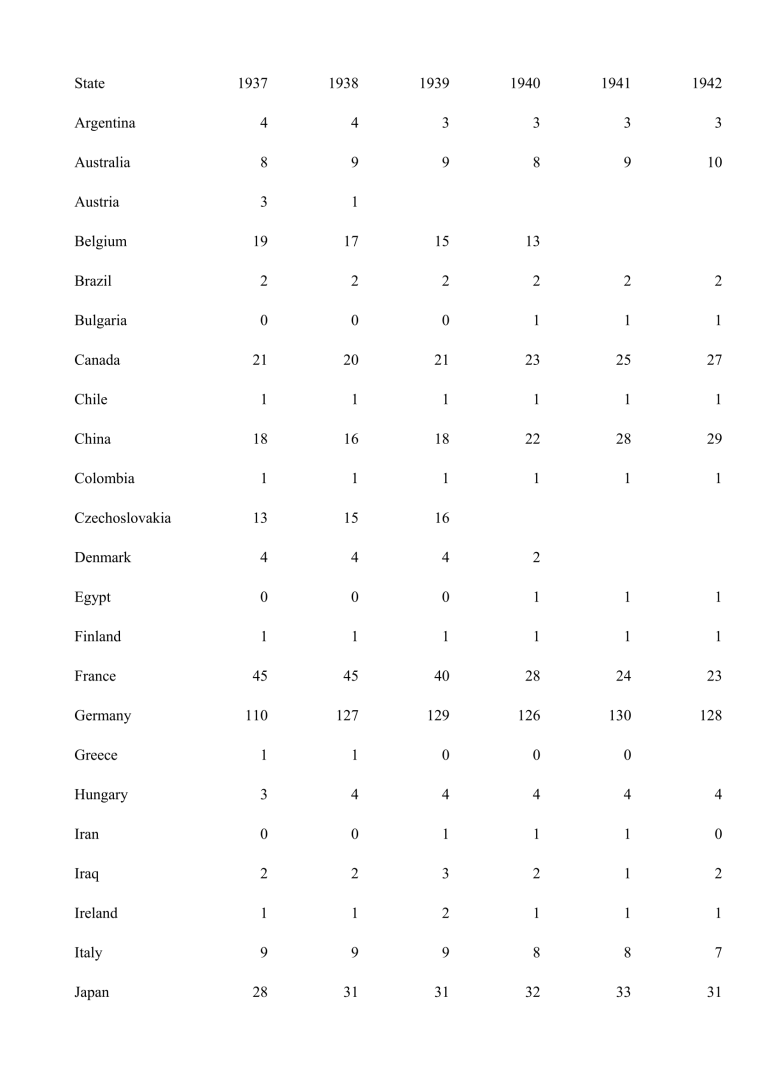
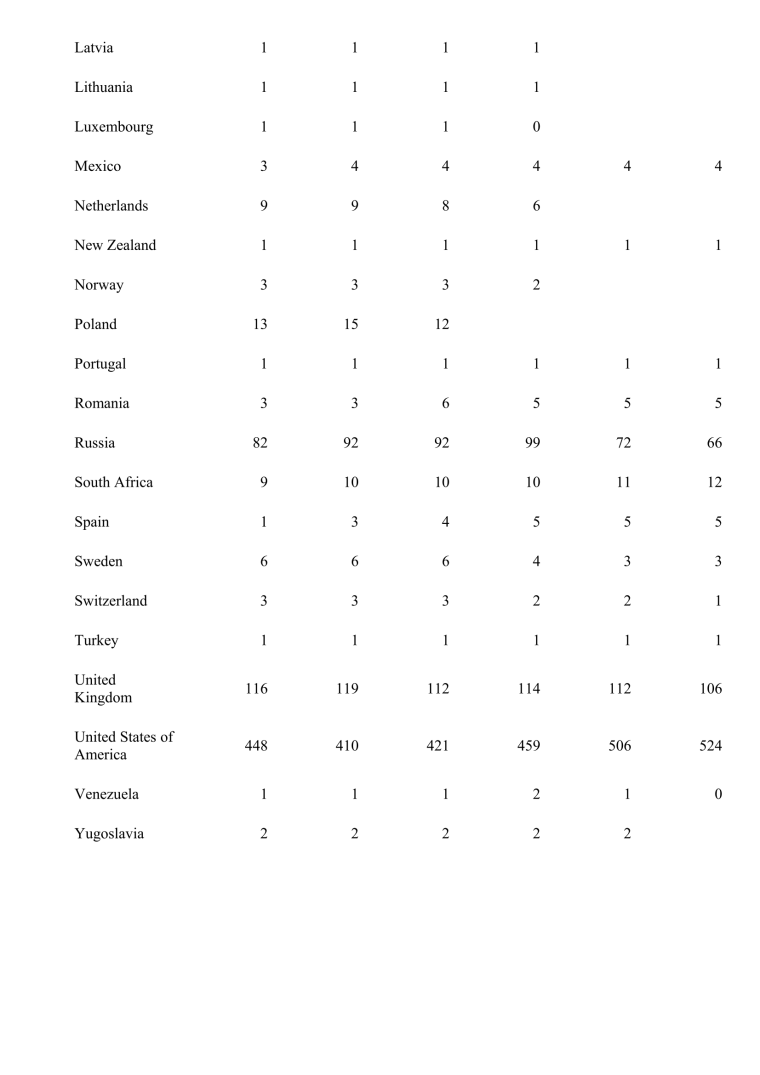
Anyways, the above values look pretty good to me, if one wants to have a basic reference for country based PUs production, albeit they tend to give a lot of value to quality over quantity (for example, you might disagree with Canada being about as powerful as China, in WW2). At least, energy consumption looks definitely more on the spot than other indexes, like steel production or GDP (for example, the first one would give an overly weak China and the second one would give an overly strong China).
The only significant issue that I see with the COW-Reformatted.xls is that there are no Energy Consumption values for India. I'm surprised about that. Are they missing in the COW site?
-
@cernel Maybe the biggest thing that would surprise me out of those values is that Poland would be stronger than Italy. I wonder if at those times Poland was more economically advanced than Italy. Also, maybe energy consumption overvalues countries in colder regions; no idea what is the relative impact of home heating on energy consumption.
-
In 1940:
Axis: Germany(126)+Denmark(2)+Norway(2)+Belgium(13)+Netherlands(6)+France(28)+Hungary(4)+Romania(5)+Bulgaria(1)+Yugoslavia(2)+Finland(1)+Italy(8)=198
Allies:Australia(8)+Canada(Assuming 9)+Egypt(1)+New Zealand(1)+Russia(99)+South Africa(10)+UK(114)+Latvia(1)+Lithuania(1)=244
Combine all axis/allies do not even make up USA in terms of energy consuption. Adding USA would make game unplayable. But suprisingly without US their values look close to each other.
-
@cernel Also, for a general relative comparison of all countries, I personally suggest taking the 1937 economic data over whatever that follows. The reason is that at the end of 1937 the United States of America had a major depression, that impacted differently on the various countries in the world; so the data for 1938 and 1939 is not as good as 1937 (it undervalues USA, etc.), while the data from 1940 onwards suffers from war events. Alternatively taking 1939 data and multiplying it by 1/(1-x), when "x" is the unemployment ratio for that country (not very good, as different countries account unemployment in different ways). 1937 would be just the year that minimizes the incidence of the Great Depression on the data (the United States of America, etc. will be undervalued anyways; just less so).
-
Another objectionable thing about these numbers is they do not reflect natural resorces, harbours, strategic locations, for example in this data Denmark and Norway are equal but Norway had oil and lots of harbours for German U-boats and located in more important area. I would say Norway deserve at least twohold or threefold more value. The same applies to Iraq or Iran.


Hello! It looks like you're interested in this conversation, but you don't have an account yet.
Getting fed up of having to scroll through the same posts each visit? When you register for an account, you'll always come back to exactly where you were before, and choose to be notified of new replies (either via email, or push notification). You'll also be able to save bookmarks and upvote posts to show your appreciation to other community members.
With your input, this post could be even better 💗
Register Login