Flames and Steel (official thread)
-
@Vendetta Wouldn't make more sense for Flak Towers to reduce the damage roll for bombers.
-
One of the unique techs I outlined for Germany in my set was “Flak Towers.” The effect I intend it to have is that if facility AA has a near miss against a strategic bombing raid (i.e. rolls a 2 by default, or a 3 if you have AA Radar tech), the bomber will be forced to abort its mission and go home without dealing any damage - but it will get to fly back without being shot down.
I also outlined a “Flying Fortresses” tech which would be available to everyone, but the US would have a bonus making it easier to develop. That tech would make any hit scored by AA fire against a strategic bomber require a hit on a second roll to confirm and shoot it down. If the confirmation roll misses, the bomber aborts the mission but survived and returns. The bonus would not apply against interceptions by fighters - if they score a hit, it’s a kill.
Allowing situations where the defense can succeed but the bomber can survive struck me as a good way to play with the balance of the strategic bombing game without giving the bombers extra hit points. It works easily enough on tabletop, whether it can be translated into the TripleA engine is something I’ll have to find out.
Could be a good way to fine tune the balance in your bombing war meta without ping-ponging between either the defenders or the bombers being wiped out in one sided massacres.
It would take some extra work to make it play nice with your multiple hit point system. One thought that comes to mind is having the AA/interceptors roll two sets of dice per turn. One set inflicts damage as normal, while the other forces a retreat if it hits. That way you’d end up with a range of possible outcomes - they might get through and bomb the target with or without taking damage, or they might get sent back to base with or without damage, or they might get shot down.
I don't know if you've played Axis and Allies Naval Miniatures. If you haven't, I'd strongly recommend it. It's a very good game.
The reason I bring it up is because it has the same "aborted" concept you are describing here. That game's combat system is a little different from normal Axis and Allies. Let's say you have an aa gun with a value of 8. That means you roll 8 dice. Each die roll is either a hit or a miss, except that a 6 counts as two hits. You then count up your hits and compare them against the plane's armor and vital armor. Maybe a plane has armor 5 and vital armor 7. If you get hits at least equal to a plane's armor, it's aborted. It lives, but it doesn't get to attack ships or subs for the rest of the combat round. If you get hits at least equal to the plane's vital armor, the plane is killed outright.
In my test games of Flames and Steel, I've noticed that most of the time air theaters are uncontested. The side with air supremacy is able to strafe the armies of the side which has lost control over the sky. But, some of the time, an air theater can be contested. In which case, things can get very destructive very quickly. I'm okay with that in and of itself. A game doesn't need 20 rounds of huge stacks building up to be a fun game.
I have two concerns about the way the air aspect of the game currently operates.
- Game balance. In some of my example games the air part has unbalanced the game in favor of one side or the other.
- All or nothing proposition. If a nation knows it will be the weaker party in an air theater, its best option is to avoid participation in that theater entirely. When the time does come to participate, it should do so in massive force.
I can always tweak stuff for game balance. The deeper concern is the all or nothing aspect to air combat. Axis and Allies Naval Miniatures managed to avoid that problem. The sky was generally contested every round. Every round both sides' bombers would strike naval targets. I realize that Naval Miniatures is a simulation of an individual naval battle, not a world war. Even so, the "contested sky" aspect of that game is something I'd like to bring into Flames and Steel.
The way I see it I have two options.
-
Keep my current system. It isn't perfect, and it loses the "contested sky" aspect I would have wanted. But most aspects of the game are working as intended, and that's something which makes me very happy.
-
Completely rethink my approach to air. I don't know what the new approach should be. But I do know that I want the following:
- Aircraft fighting each other for control over the sky.
- Aircraft specialized for specific roles. In my current iteration, dive bombers, torpedo bombers, fighters, medium bombers, and strategic bombers each have a unique purpose.
-
After a very interesting conversation with AI, I am now considering the following system.
-
Aircraft are allocated to theaters, as now. For example, the Eastern Front is the Luftwaffe against the Soviet Air Force.
-
There is a dogfight phase. Only air superiority aircraft participate in dogfights. This means fighters, advanced fighters, jets, and (new unit type!) heavy fighters. During the dogfight phase, all aircraft fire at their dogfight values. Destroyed aircraft are removed.
-
Then, there is an interception phase. Fighter-type aircraft fire at their interception values. Bombers fire back at their defensive fire values. Destroyed aircraft are removed. Damaged bombers are aborted.
-
Any bombers which weren't destroyed, and which weren't aborted get to bomb whatever targets they had in mind. Strafing armies, attacking navies, or strategic bombing raids.
To make this more concrete: a fighter would have a dogfight value of 3 and an interception value of 3. A heavy fighter would have a dogfight value of 2 and an interception value of 4 or maybe 5. Also it would cost a little more than a normal fighter.
I don't know for sure how this will actually work without play testing. But here is what I hope would happen. The Soviet player sees that Germany is able to allocate, say, 10 fighters and 6 dive bombers to the eastern front. The Soviets have 5 fighters, a dive bomber, and a heavy fighter they could allocate. The dive bomber hides in Siberia so it won't be shot down during the interception phase. The rest of the Soviet air are sent to the eastern front. The Soviets lose more air than the Germans during the dogfight phase. But, at least the German dive bombers didn't get to fire during the dogfight phase, so that made it a bit more even. Most of the Soviet fighters survived the dogfight, earning the chance to intercept the German dive bombers. The chance to kill or abort some of the dive bombers helps balance out this air battle. This balancing out is what induced the Soviet player to participate in the air battle in the first place, instead of hiding his entire air force in Siberia.
-
-
The system sounds elegant in theory, but one issue that stands out even before any play testing is that if you’re the weaker power, there is zero incentive to build anything but fighters - bombers of any sort seem useless if you don’t have air superiority. And while there was eventually a point in the historical WW2 where Germany became desperate enough to adopt that as official production policy, that wasn’t the case for most of it - most powers were still trying to field both offensive and defensive capabilities simultaneously.
The Soviets never parked their Il-2 fleet out in Siberia to wait until the VVS had won air superiority - they used it, constantly, accepting the heavy losses that entailed. So a system that encourages players to do that is rewarding unrealistic behavior.
A few ideas on ways to address that:
A) Shrink your air theaters. Instead of one for the entire Eastern Front, imagine having about three different air zones there (north, center, south). More zones means fighter coverage is spread thinner, creating opportunities for the weaker side to gain local superiority - the Germans might prevail in two of the zones, but the Soviets could concentrate their forces to win control over the third one.
B) Allow fighters on escort missions to take hits meant for the bombers they’re protecting, and allow those bombers to carry out their strafing missions if they make it through even if their side has lost the battle for air superiority overall. Systems with all or nothing results (only the side that wins the air battle gets to bomb) naturally encourage unrealistic min-maxing style gameplay.
C) Use your unique tech system to give the Soviets some advantages that encourage a mixed air strategy instead of just spamming fighters - you could make their dive bomb bombers harder to shoot down, or you could make them cheap enough to be worth using aggressively even if the losses are heavy. You would also have to do that for any other cases where the system is optimizing for less interesting play.
A is probably the easiest route to test since it doesn’t involve any other changes to the system, you just play out a few test games and redraw the air zone boundaries between each to see which results in the most interesting game dynamics. B is the next most promising, it also changes up just one element, but that element is one of your system’s core attributes. C is probably a development trap where you’d end up having to constantly fiddle around with a bunch of different bespoke elements you’ve come up with to patch different issues.
Originally the game had more air theaters. I'm in favor of more air theaters in theory. In practice the larger number of air theaters created a GUI problem. Everything about the air phase is new, including the GUI. Without a clear, simple GUI literally nothing else matters. I think I'm up to 24 engine change requests or something, many of which are intended to make that GUI simpler to understand and easier to use. Making each individual air theater larger, so that there would be fewer theaters overall, helped with the GUI. But there's still GUI progress to be made there. One could say that the perfect GUI would allow me to have a larger number of theaters without creating a GUI problem.
As to your point, I agree that if the Soviet player is the weaker participant in the air battle on the Eastern Front, he will buy air superiority aircraft only. Fighters, heavy fighters, etc. I also agree that this is ahistorical, and that in the real war the Soviets built dive bombers or ground attack aircraft, and threw them in to the fray regardless of the losses.
I don't know if you've played Domination 1914 No Man's Land. If you haven't, I'd recommend it. The reason I bring it up is because it makes a clearer distinction between offensively oriented units and defensively oriented units than you would normally see for a TripleA map. If you're on defense your unit mix should be trenches, conscripts, infantry, and heavy guns. Plus some air for your back-and-forth battles. If you're on offense your unit mix should be conscripts, infantry, field guns, cavalry, gass, and tanks. A player who's purely on defense will never buy a tank, a player who's purely on offense will never buy a heavy gun.
I believe the problem of min-maxing game play is baked into TripleA rules sets in general. While I know that my own game is a departure from the usual TripleA game in many ways, the underlying logic which causes min-maxing still remains. I've tried pushing back against this where I can, but I still feel like I'm just nibbling at the edges of the problem.
To take your option A: under my current system bombers are allocated first, then revealed to all players, and only then are fighters allocated. If for example the Soviet player were to send dive bombers to the southern portion of the German/Soviet front, the German player would be able to see this in air allocation, before he'd allocated his fighters. He'd then adjust by moving more air to the southern portion of the Soviet front.
You could say that I could make air allocation more blind. Okay, granted. I could. The weaker party could take advantage of this by getting some strafing runs through that would otherwise have been intercepted. But the stronger party could take advantage of this as well, and could use bomber-type aircraft to do enormous damage while the opponent's fighters were out of place to defend.
I hear what you're saying about Soviet dive bombers, and I realize my simulation of air combat is in some ways less rich than the actual history deserves. But the min maxing problem is a very tough nut to crack. My map was intended to do some things well: air combat, research, special units, a distinct flavor for each nation. It was not intended to solve the min max problem. Don't get me wrong: I'd very much welcome a solution!
As for idea B: I will grant that this could gently encourage the Soviets to buy dive bombers. Assume that a Soviet dive bombing mission will generally kill an anti-tank gun, doing 3 PUs of benefit for the USSR. If the fighter takes the interception hit instead of the dive bomber, that creates a 3 PU reward for the Soviets which would not otherwise have existed. But this would work both ways. Germany would do the same thing, allowing its dive bombers to get through as well. At some point the Soviet player starts to care more about protecting his own armies from the major losses inflicted by German dive bombers, as opposed to inflicting smaller losses on German armies with Soviet dive bombers.
Idea C--use the tech system--could be a way to encourage Soviet dive bombers. Historically Soviet ground attack aircraft were heavily armored. So I could justify giving Soviet dive bombers +1 to hitpoints if they research the appropriate tech. This doesn't necessarily solve the min maxing problem, but it could help somewhat.
One idea I'd come up with to push back against min maxing was to give nations unit-specific production centers. A nation gets one free dive bomber a turn, for example, from its dive bomber production center. I have not incorporated this idea into my map, however.
-
@KurtGodel7 Yeah, players are relentless optimizers, so min-maxing is always a tough problem to try and get rid of. The one thing you really want to prevent is players feeling too railroaded, where it feels like there is only one possible strategy you can use if you want to win. If the Soviets can only survive by playing a very specific build order, people are not going to have as much fun playing them as they do with another nation that gets more choices.
One more idea... have you tried testing what happens if you reverse the order on your air turns? What if everyone does a blind allocation on their fighters first, you reveal those, and then you commit your bombers once you've seen where the fighters are? That would allow players of a weak air force to do some misdirection (send your fighters one way but your bombers another) , or take advantage of vulnerabilities where your opponent didn't send enough fighters.
Or, since you've included heavy fighters alongside normal fighters, you could further differentiate their roles by having one type get allocated in the first round, and the other type in the second round - the fighter is an aggressive unit you commit blindly, the heavy fighter is a reactive unit you send after you've seen where some of the enemy air force is going.
You could also split the different bomber types between the two rounds - medium bombers and strategic bombers go in the first round so that strategic bombing raids are telegraphed and easier to respond to, but dive bombers and torpedo bombers get to sneak in on the second round and become harder to defend against.
Not sure which particular combination would be best, but shaking up which types go in which order seems like a good approach to investigate.
-
I would recommend using better unit images.
It's better if each nation's non-naval units look different. Especially NWO/WaW infantry—it doesn't even look like infantry at all.
I'd go with something like this as German infantry:

-
@KurtGodel7 How are you going to enforce "Sticky Hits"?
I've used AI to make a few tweaks to the engine. The modified version of the engine lives only on my computer. The modified engine allows me to do the following:
Sorry if this was already asked, but I guess you are planning to make a pull request to have all new features you developed to support this map added to the official TripleA release once you have the map ready. Right? Are you confident that the main developers will accept them? Maybe you should open feature requests (assigned to you) in advance (one for each new feature which your map needs) so to try to understand if there is the willingness to accept the feature additions? I mean, what happens if you finish the map and then the feature requests needed to have it playable are refused?
-
I am sure everyone will want to review all features separately before adding them in. Even if they are working in your mod, there can be bad interactions with other features.
-
I now believe that a good German opening involves taking Leningrad on G2
This is always a good opening for GER but it is impossible in many other games

-
- My planned solution to this (once my weekly usage limit resets).
Just for curiosity, once your weekly limit resets, how do you interact with AI ?
You just write what you posted here on the forum in teh propmpt and AI understand everything at your 1st attempt ? -
Normal Soviet behavior varies depending on the map. If you're playing Revised, the Soviets would maybe buy fighters for back-and-forth battles.
I play Total World War (hard) recently
-
I would recommend using better unit images.
It's better if each nation's non-naval units look different
100% agree !!!
I started WorldAtWar 22 nations and it is a hell !
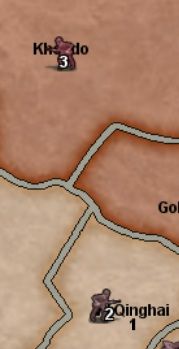
22 powers are too much and colour palette is not enough, some powers have almost the same colour so it is hard to ditinguish a chinese inf from a russian inf (and they are also close in some part of the map).
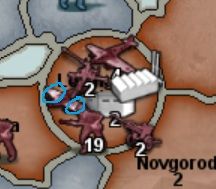
Also I found very hard to understand if a fighter is normal or advanced, when you purchase them it is almost clear but once in teh map together with oter units it is very very hard, the thin white lines I circled in blue are almost invisible !


Hello! It looks like you're interested in this conversation, but you don't have an account yet.
Getting fed up of having to scroll through the same posts each visit? When you register for an account, you'll always come back to exactly where you were before, and choose to be notified of new replies (either via email, or push notification). You'll also be able to save bookmarks and upvote posts to show your appreciation to other community members.
With your input, this post could be even better 💗
Register Login