




-
0 Votes2 Posts734 Views
-
1 Votes58 Posts24k Views
-
5 Votes19 Posts3k Views
-
0 Votes4 Posts978 Views
-
2 Votes20 Posts4k Views
-
3 Votes1 Posts554 Views
-
0 Votes8 Posts4k Views
-
1 Votes7 Posts1k Views
-
1 Votes10 Posts2k Views
-
0 Votes103 Posts63k Views
-
0 Votes1 Posts384 Views
-
0 Votes9 Posts2k Views
-
4 Votes96 Posts55k Views
-
0 Votes1 Posts580 Views
-
2 Votes4 Posts1k Views
-
1 Votes2 Posts587 Views
-
0 Votes8 Posts2k Views
-
0 Votes1 Posts509 Views
-
5 Votes265 Posts246k Views
-
-1 Votes3 Posts841 Views
Recent Posts
-
I would recommend a name swap for the Advanced Production Centers, since APC is an acronym that every wargame is going to associate with armored personnel carrier.
Special Production Center / SPC should be a pretty easy substitute to avoid the overlap.
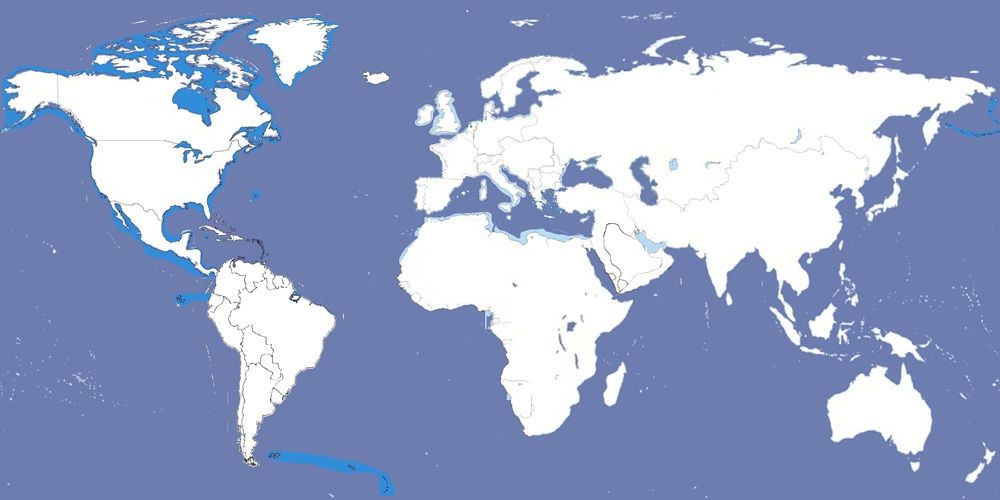
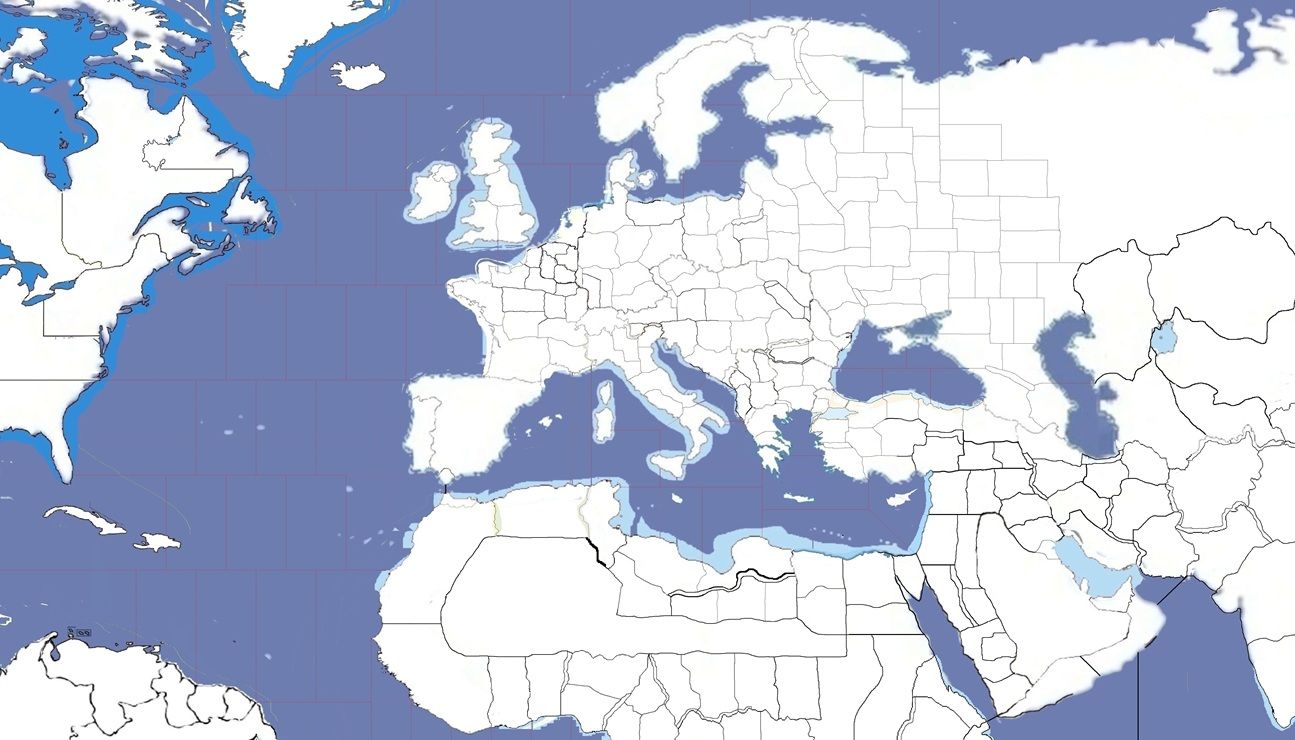
Your Europe map looks beautiful, from what I can see. Taiwan and Okinawa are a bit off-putting on the Asia one, they’d look better if they swapped sizes with one another. Okinawa being placed that close to the edge of the sea zone also leaves me wondering whether it should be shifted onto the boundary line instead.
Your combat system ventures far enough from any version of the game I’ve played that I can’t really offer any judgement about it at this point. Hopefully, once you’re far enough along in development, you can share a play by play of a test game as a demonstration.
-
Also:
AA guns now work differently. AA guns fire after the dogfight phase. They fire on a 2. Each aa gun gets one shot only, without regard to the number of enemy air units present. With three aa guns, you are guaranteed one hit. If there is a particular factory you want to defend, you could pile a lot of aa guns into the territory with the factory. Defending your army from being strafed is more difficult, because the dive bombers could always choose to attack a territory where your aa guns aren't. AA guns don't fire during ground combat, but they can be taken as casualties.
Dive bombers fire at twice their normal combat value when attacking land targets. Likewise, torpedo bombers fire at twice their normal combat value when attacking surface ships. Imagine attacking a fleet of 10 ships with your torpedo bombers. Only the ships damaged or destroyed by your torpedo bombers would get to fire at aircraft. The rest of your fleet was considered too far away from the action to be able to use its aa guns. The way to defend against enemy torpedo bombers is with fighters and jets.
Air zones come in three flavors: land, coastal waters, and open ocean. For a land zone, you need a landing base within range of your aircraft. For coastal waters, you need either a landing base or aircraft carriers. For open ocean, only carriers will suffice. When using carriers, the number of aircraft you can have in a zone is limited by carrier capacity.
-
To add to my earlier post:
Strategic bombing. This now does a fixed amount of damage, instead of involving die rolling. Damage is in PUs, and is capped at double the territory value. The air phase only happens once per game round, so a 4 PU territory can cost you, at most, 8 PUs in strategic bombing value per game round.Strategic bombing damage
Medium bomber: 2 PUs
Strategic bomber: 5 PUs
Superfortress: 13 PUs
Flying wing: 6 PUsTo give an example of this, suppose Japan wants to wage a strategic bombing campaign against China. Separately, Japan wants to use dive bombers to strafe the Chinese Army. China can allocate its limited fighter force to the "Japan vs. China" air zone to try to defend against the dive bombers. Or it can allocate its fighters to the "bomb China" air zone to defend against the strategic bombing raids.
Other than the U.S. and Britain, no one starts the game with the tech needed to build strategic bombers. Japan can always research that tech. In the meantime, however, it can use medium bombers for its strategic bombing campaign. China can defend against this by building fighters and aa guns.
-
@KurtGodel7 How are you going to enforce "Sticky Hits"?
I've used AI to make a few tweaks to the engine. The modified version of the engine lives only on my computer. The modified engine allows me to do the following:
Reinterpretation of air combat. The map is divided into air theaters. You assign fighters and bombers to each theater. For example, eastern Germany and the western Soviet Union are part of the Germany vs USSR theater. During the dogfight phase, air units shoot at each other, using their dogfight values. Note that air superiority aircraft, such as fighters, advanced fighters, and jets are excellent during the dogfight phase. Then, you pick targets for your surface attack. Maybe you have German dive bombers strafing a couple Soviet territories, and Soviet dive bombers strafing a German territory or two. During the surface attack phase, the armies getting strafed do not fire back, except for aa guns.
Sticky hits are automatically enforced.
Research system. Each nation has a fixed number of research centers, with each research center generating one tech advance per turn. There is a 40% chance of the tech advance being in its primary focus, a 20% chance of it being its secondary focus, and a 40% chance of it being chosen at random. Each advance causes a dull grey star to be replaced by a bright yellow star. For example, heavy tanks tech starts you out with four dull grey stars. Each advance you get in tanks tech replaces a dull grey star with a bright yellow star. Once you have all four bright yellow stars you unlock heavy tanks.
Advanced Production Centers (APCs). Special units, such as heavy tanks, fleet carriers, jets, or Superfortresses cannot be built with PUs. They can only be produced with APCs. Each APC produces one special unit per turn. However, it takes two turns to produce a Superfortress or flying wing.
Manpower points, or MPs. These are an additional resource type. Imagine a purely hypothetical nation rich in manpower points, but poor in PUs. This nation "China" can have a large infantry force. But it will not have very many non-infantry units due to low PUs. The Soviet Union can have the world's biggest infantry force, as well as plenty of PUs for non-infantry units. Territories produce MPs only for their original owner.
Lend-lease. British and American units are not allowed onto Soviet or Chinese soil. As if to make up for this, the British and American players can build munitions. Munitions are allowed onto Soviet or Chinese soil. Upon the end of the Soviet or Chinese player's turn, they are converted into Soviet or Chinese PUs. If a transport with munitions aboard gets sunk, the munitions are destroyed. If the Axis captures a territory with munitions present, those munitions are immediately converted into PUs for that Axis nation.